Communicating Contested Geoscience

On Friday 20th June I attended the Communicating Contested Geoscience conference at the Geological Society’s Burlington House. The title for this conference was ‘new strategies for public engagement‘ and it was focused on three of the more controversial geological subjects in development at the moment; carbon capture and storage, radioactive waste disposal and fracking for shale gas. The day featured speakers from across a wide range of public bodies and private companies, academia and industry and provided a brilliant synopsis of many of the biggest issues with communicating these subjects that geologists see today.
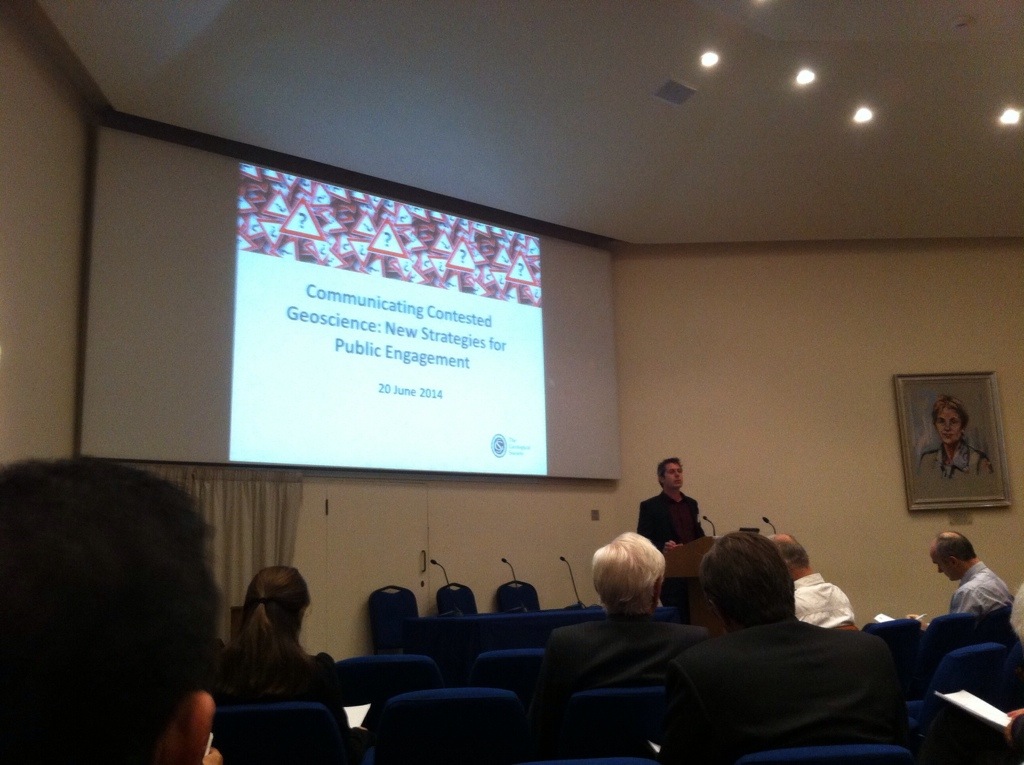
20140630-225611-82571529.jpg

The day was started off with Prof Iain Stewart talking about our responsibility to communicate what we do to the public and that reliance on the old style deficit model is no longer an option. The idea that ‘if we can get the science and then just tell that to the public then they will understand’ is no longer the case; as trust, relationships and fear all play a part in how the public respond to our attempts at communication.

David Manning, the new president of the Geological Society gave the first talk of the day, reflecting on the role of geoscientists in society and the responsibilities of large organisations like the Geological Society to provide facts that allow people to make their own decisions. He mentioned that it would be next to impossible to fully represent their members’ opinions as with 12,000 members it wasn’t unreasonable that they would have to represent 12,000 opinions! He also introduced what was to become a central concept of the day, the role of the three pillars of sustainability – environmental, social and economic and the role of these in communication.
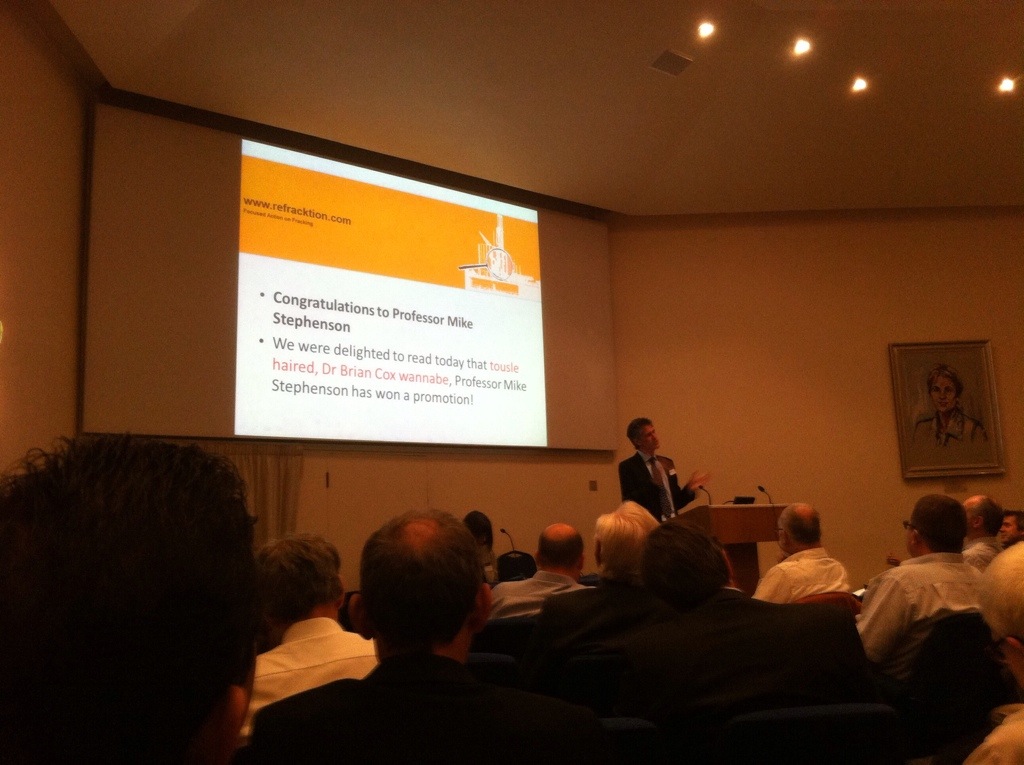
20140630-225825-82705663.jpg

The first session addressed one of the most high profile examples of the difficulty of communicating our geoscience – fracking for shale gas. It was chaired by Zoe Shipton from Strathclyde University and the panel consisted of David Mackay from DECC and the University of Cambridge, Mike Stephenson from the BGS, Brigitte Nerlich from Nottingham University and Mark Lappin formerly of Dart Energy. The shale gas session was always going to be one of the most difficult and was frequently threatened to derail in pursuit of technical issues, but Dr Shipton did an excellent job of keeping everyone on the Communication track. The session looked at the uncertainties of shale gas resources, comparing them to various renewable technologies, the changing nature of public engagement, the influence of the media and what is ‘the community’. The panellists also took a look at perceptions of the need for gas – brilliantly exemplified by a tweet sent from the protesters at Barton Moss “Urgently need gas for cooker!”
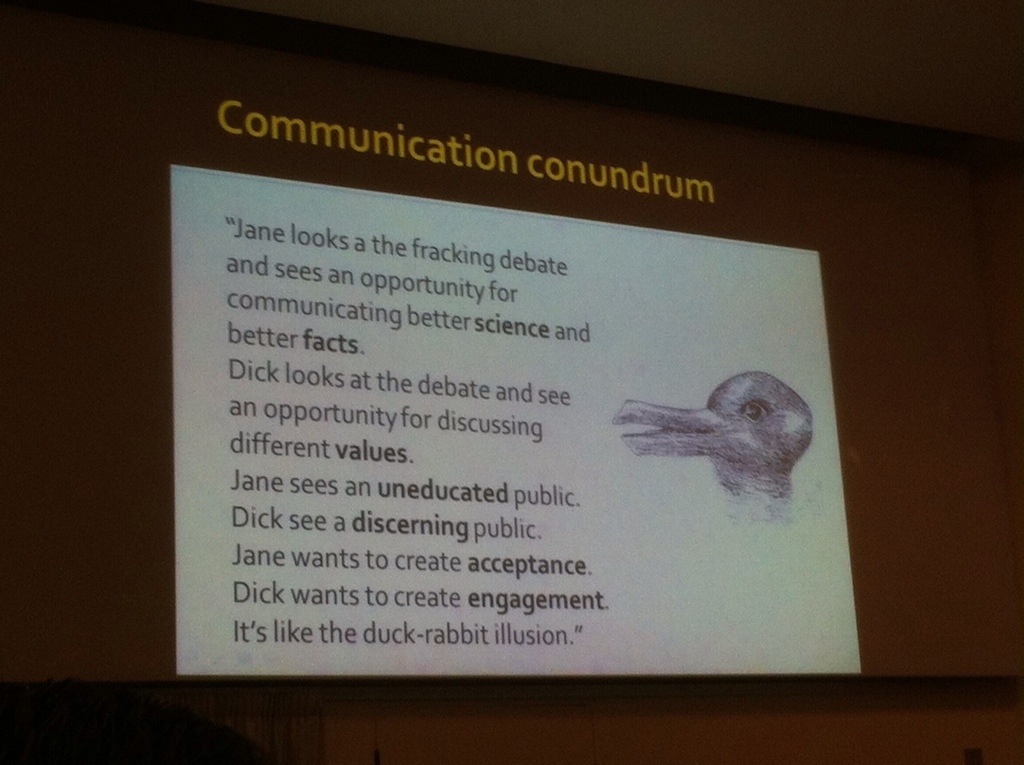
20140630-225926-82766669.jpg

At the end of this session spirits were running high and a number of good discussions on how to build and maintain trust and effective ways to engage with the community were explored and whether more or less data was better for transparent communication and understanding. One interesting point raised by a member of the audience was on the nature of risk – that it’s often easy to dismiss risk for the public because we know the statistics, but for the average person that risk is not approached in the same way.

The second session of the day was about CCS (or Carbon Capture and Storage). The panel was chaired by Clair Bond from the University of Aberdeen and consisted of Andy Chadwick from the BGS, Jon Gluyas from Durham University, Kirsty Anderson from Global CCS and Clair Gough from the Tyndall Centre and the University of Manchester.
20140630-230102-82862679.jpg

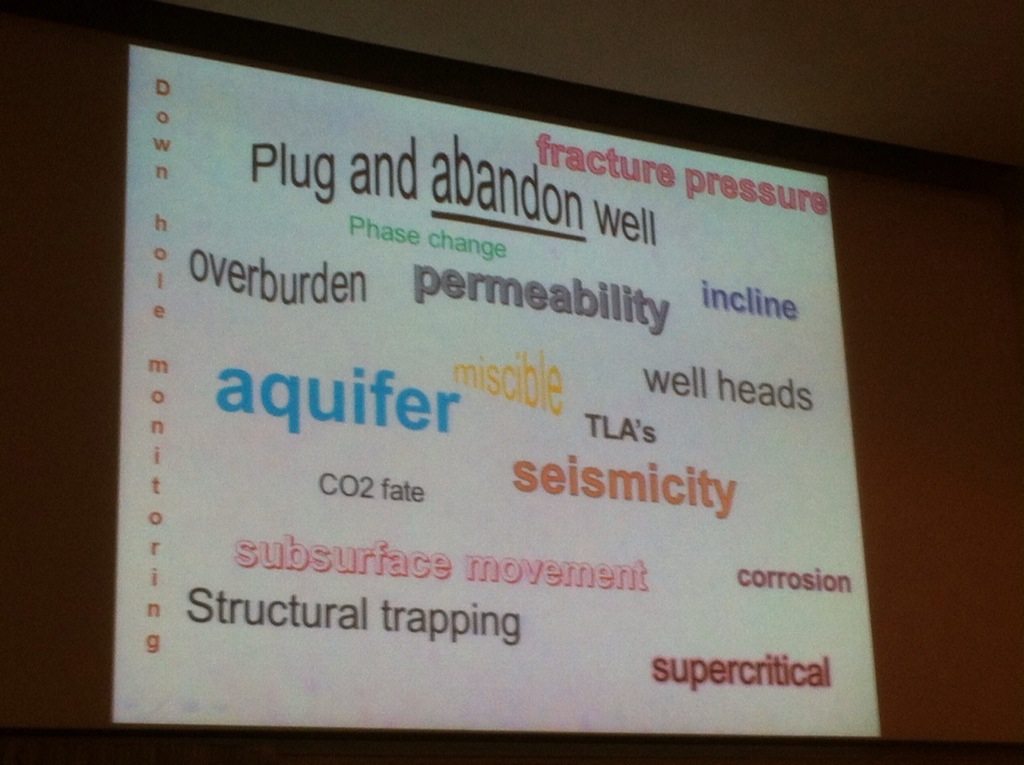
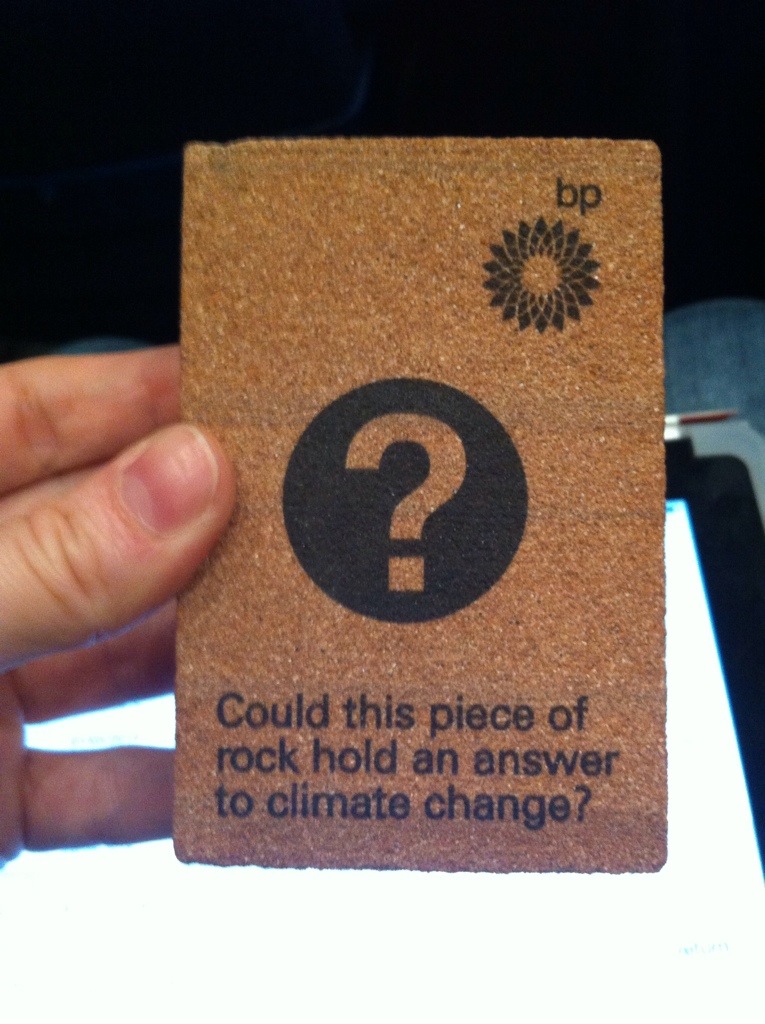
Although this session focussed on a range of ideas from the difficulty of communicating scales – even accurate ones – to understanding the societal context and peripheral issues of CCS, one of the best talks in my opinion came from Kirsty Anderson of Global CCS, the only non geologist on the panel. Kirsty talked about the value of having an embedded communication strategy at all levels of the project team and also stressed the importance using target communications early – which does not mean going to a paper early, but engaging with stakeholders and other key influential people. She also highlighted how words that we see as innocuous actually can leave a lasting impression – such as to ‘plug and abandon the well’ may leave thoughts of poor little abandoned orphan wells all over the country!
20140630-230145-82905282.jpg

We came out of that session mulling over the idea that controversial does not necessarily mean conflict, but that it is actually a critical element of the debate, which should not be ignored, suppressed or managed away.

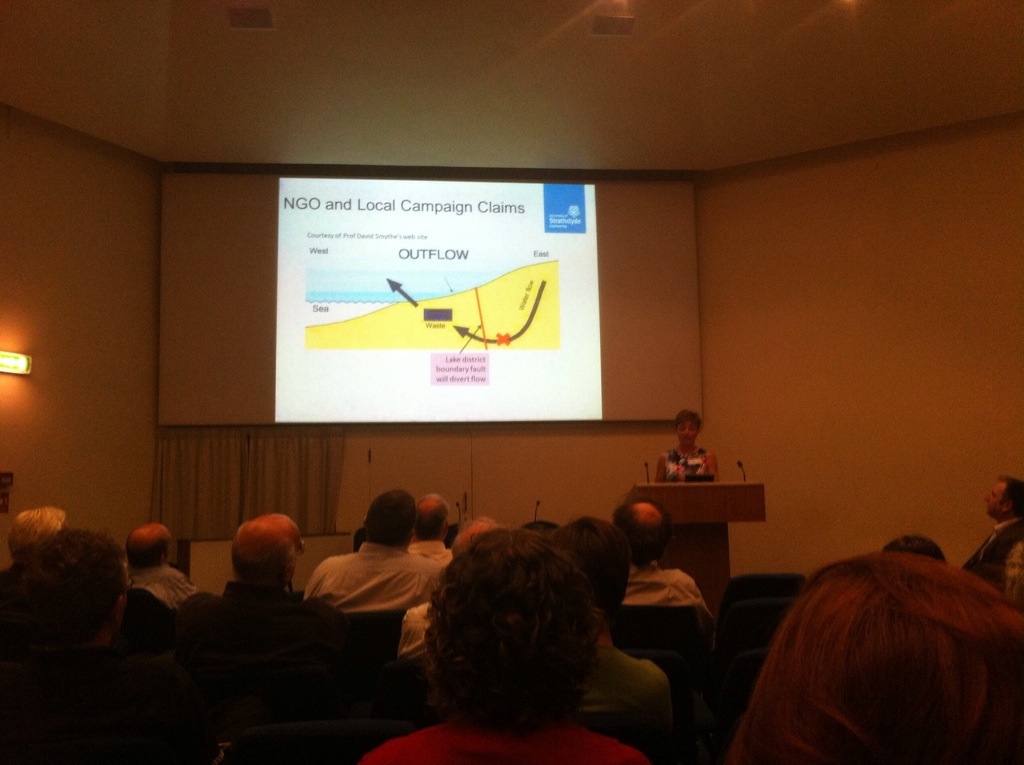
The third session of the day focused on Radioactive Waste Disposal. The session was chaired by Nick Smith from the University of Manchester and featured Rebecca Lunn from the University of Strathclyde and the Committee on Radioactive Waste Management (CoRWM). The panel was also made up of the two Bruces; Bruce Yardley from the Nuclear Decommissioning Agency and Bruce Cairns from DECC, and Phil Richardson from Galson Sciences.
20140630-230243-82963413.jpg

This session was interesting as it looked at the pressing issues of radioactive waste disposal – how much waste we have already and the need for long term solutions – and how they make this a particularly challenging issue. In addition the obvious notions about what makes secure storage are not necessarily true – in some locations a fractured geological storage can be used as the geology itself is not necessarily the barrier to flow, but what keeps the engineered barriers in place. Once again there was lots of discussion about when to communicate and how to get in touch with communities, but was interesting was how the discussion had started to shift back towards the deficit model of communications. The discussion became less about dialogue and more about information transfer – what to tell people, not how to engage them.

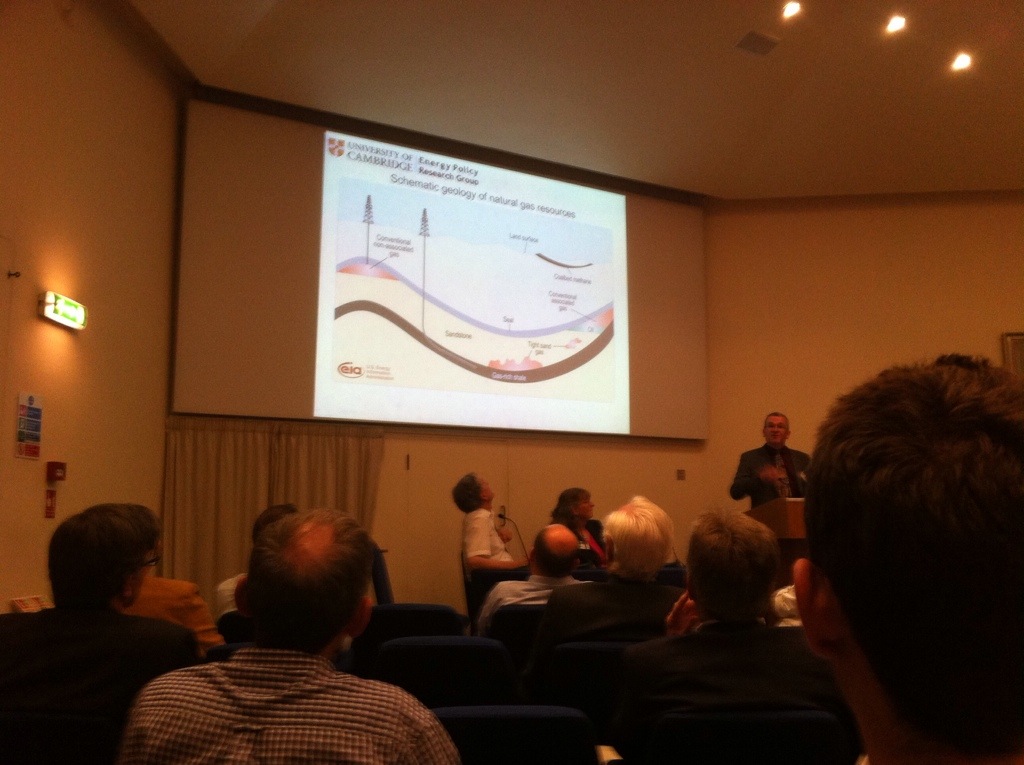
The final session focussed on the central issue to all the topics of the day – public engagement. The session was chaired by Iain Stewart, the keynote was presented by Nick Pidgeon from Cardiff University and the panel consisted of Ruth Allington from GWP Partners and David Reiner from the University of Cambridge.
20140630-230342-83022928.jpg

This was almost a summing up session, exploring the social context of risk and how we apply local issues to the national question, but also about the importance of images and of a balanced mediation in dealing with the public and industry. However, after these issues were raised in the presentations, focus of the questions seemed to slide back to information transfer. It almost seems like we need to get this discussion fully out of our collective scientific system before we can move on to new methods and approaches.

The day was closed by the fantastic Paul Younger from the University of Glasgow. His light-hearted and humorous presentation reminded us that we are a community that needs to stick together and that although it is easy to be critical of ourselves as a community, we don’t actually do that badly – and at least, with conferences like today’s we are attempting to improve our approach. He ended by singing us a little song to remind of why we do any of this at all –

‘the things we do for love’.

20140630-232311-84191362.jpg
(photo from the-geek-goddess)


For more info and links check out the Storify.
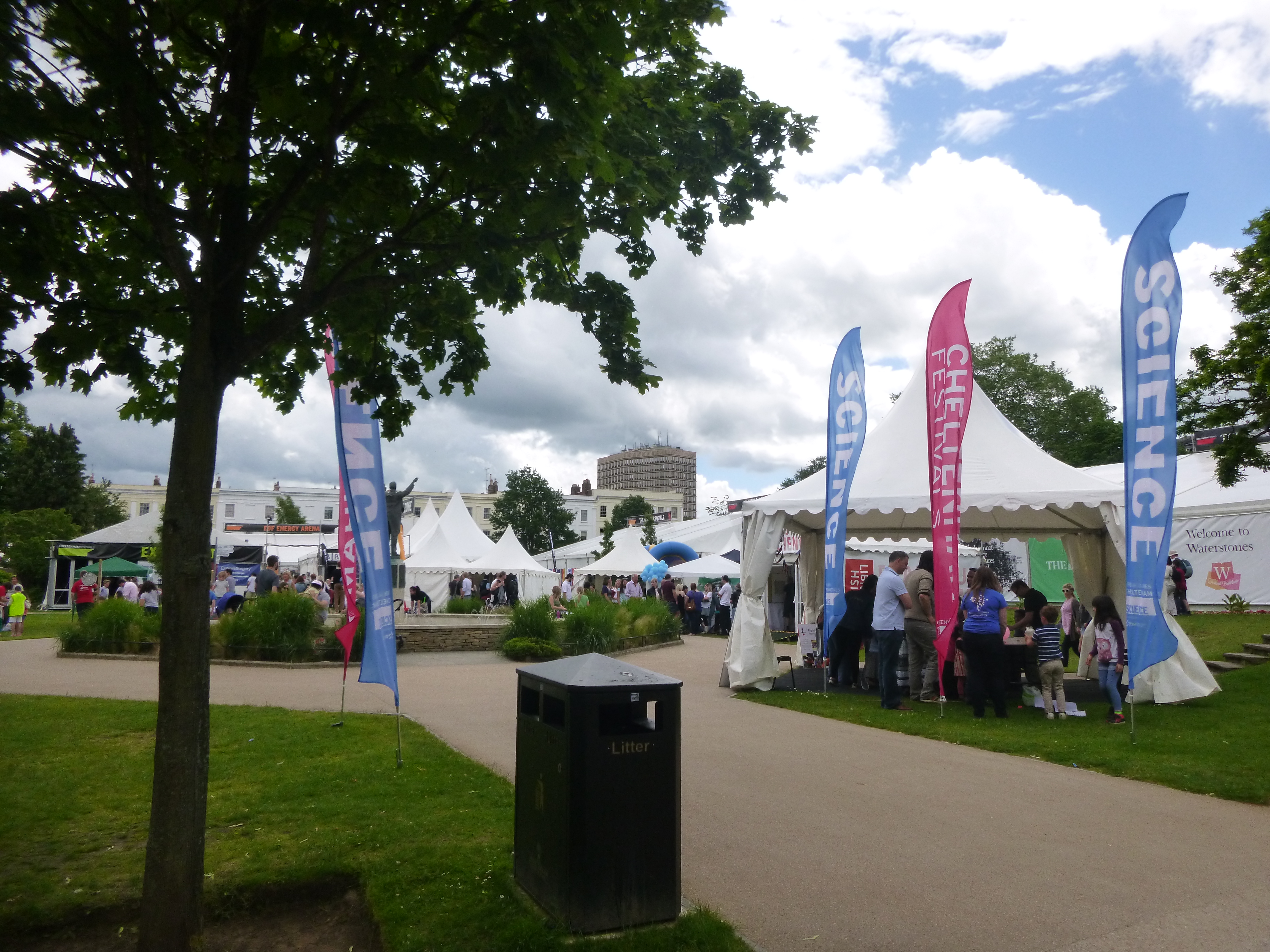
Cheltenham Science Festival

It's a Science Festival!!!

It’s a Science Festival!!!

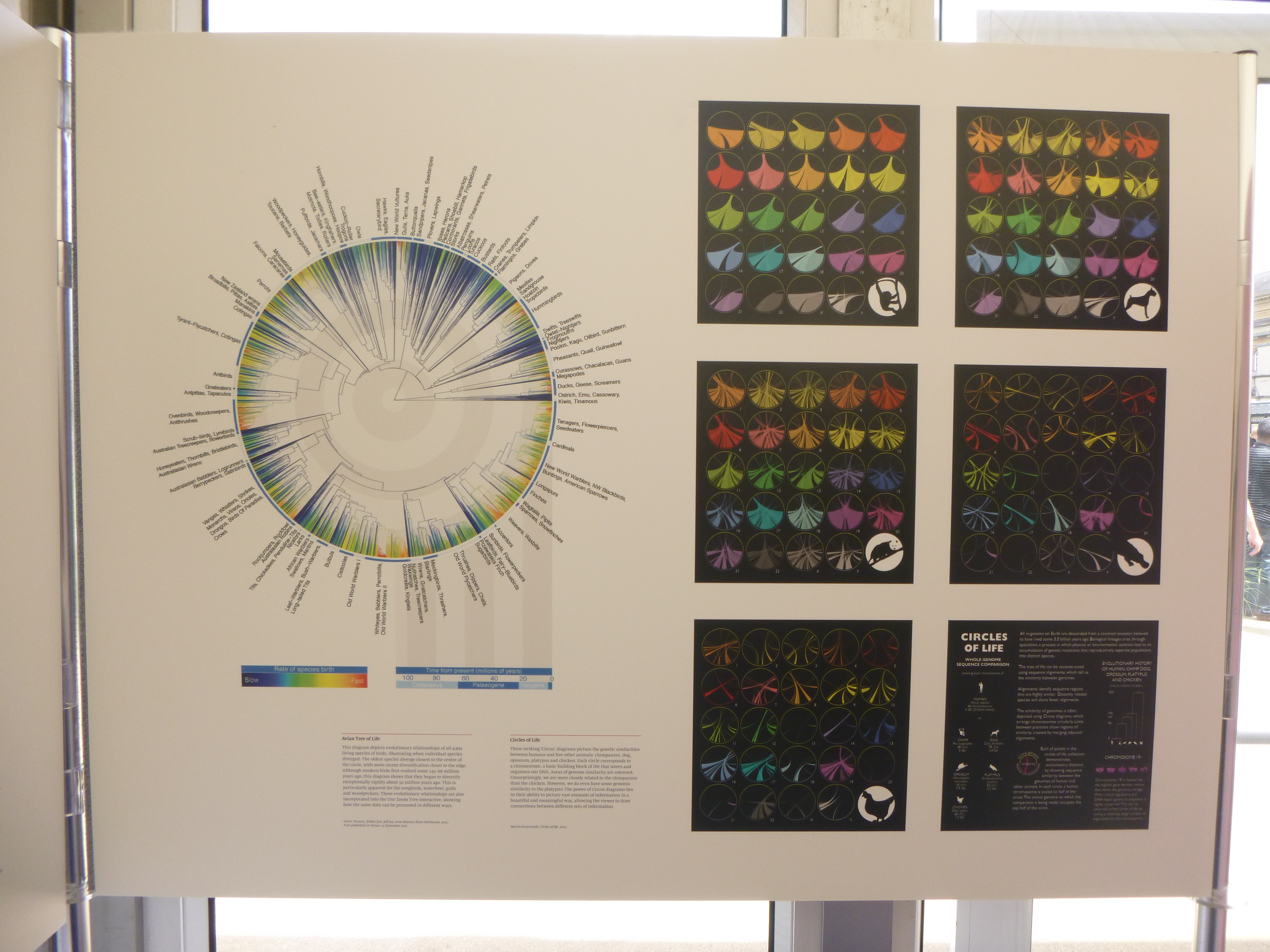
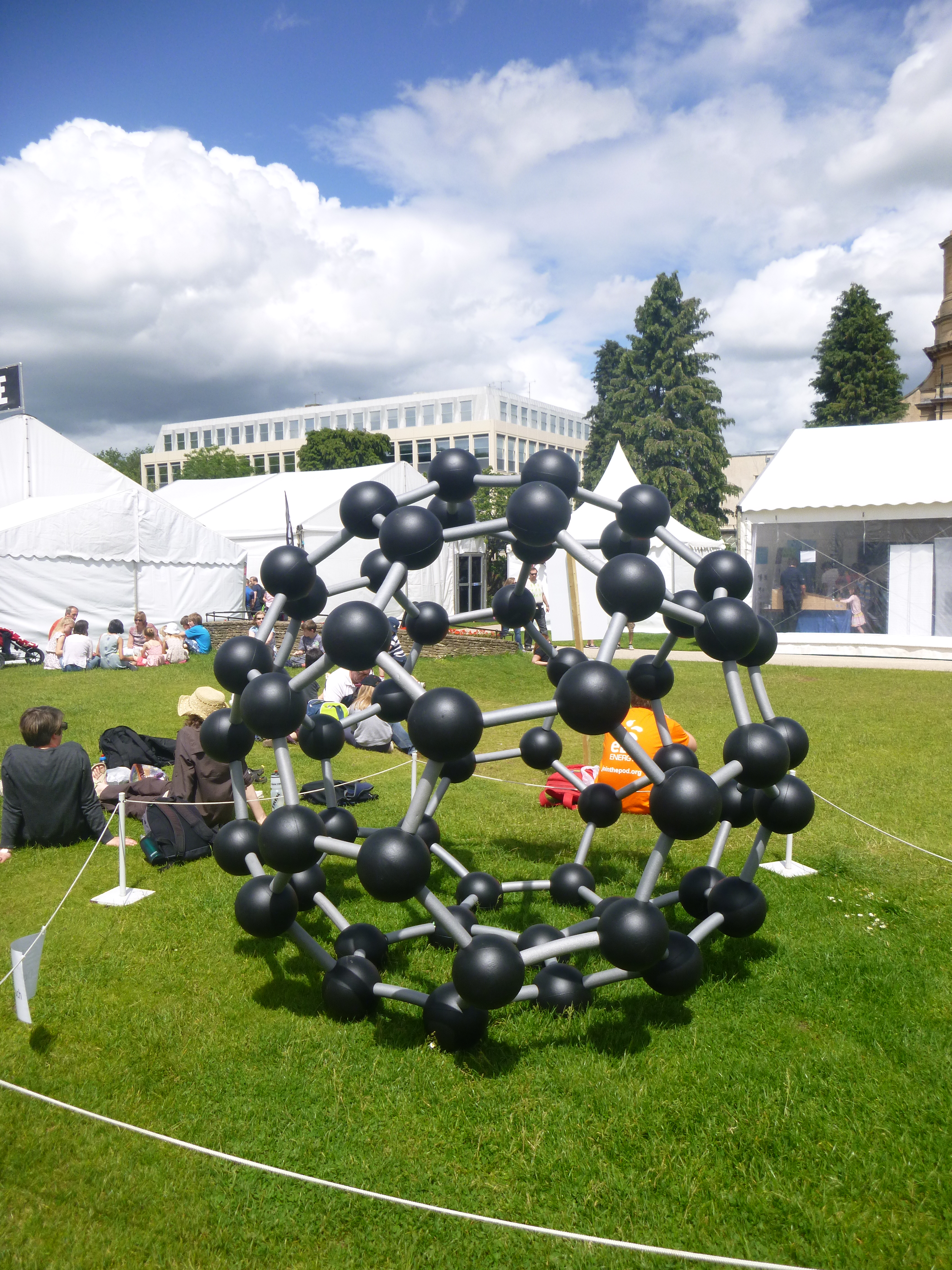
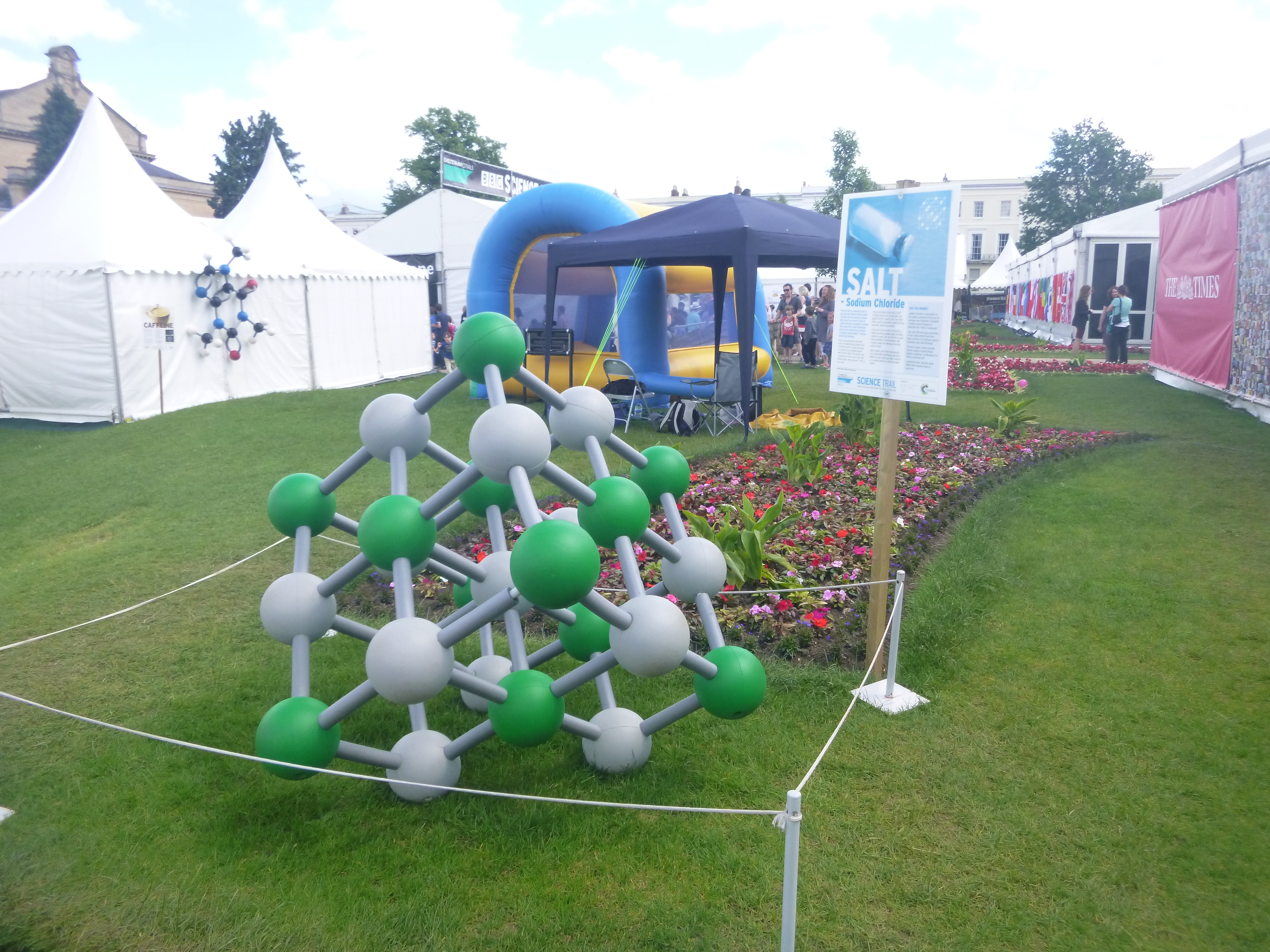
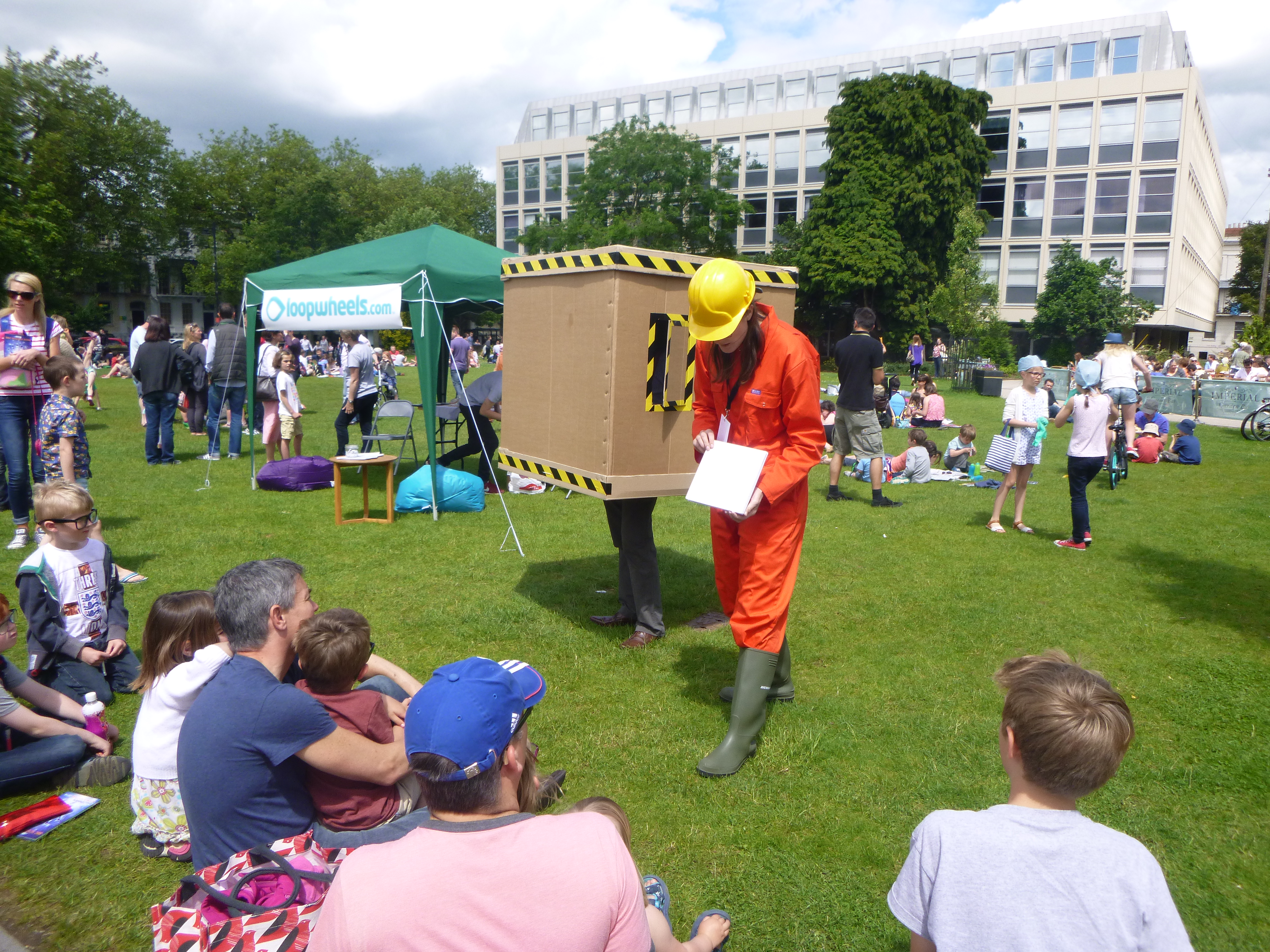
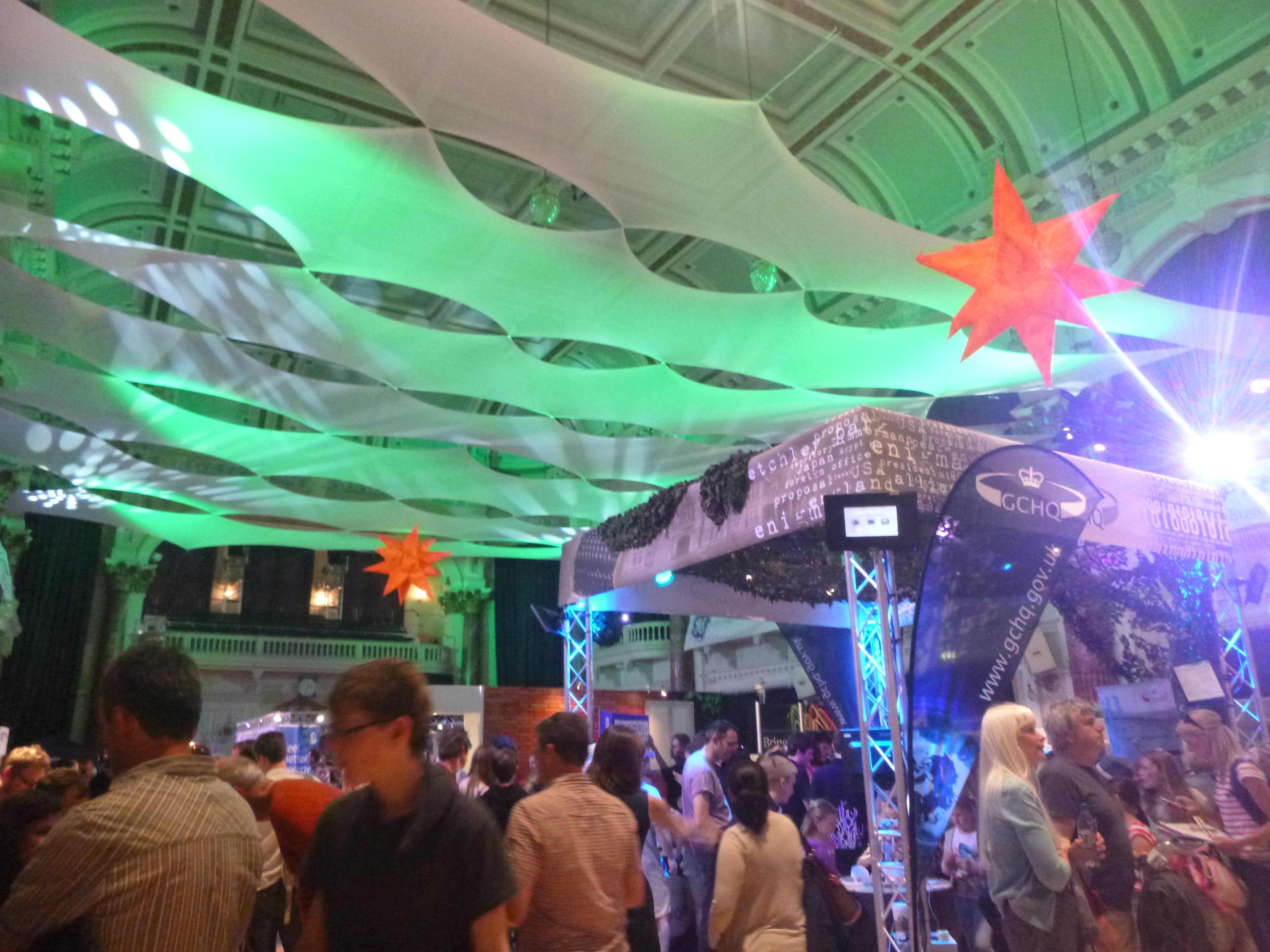
This year, for the first time, I attended the Cheltenham Science Festival as a tourist. And it was great!! I was particularly pleased to see how much geoscience there was there, and had a number of great chats with scientists and engineers on the value of the festival and of the work or research that they were doing. As a quick snapshot, here are a few of my favourite things from the festival…

Visual information

Visual information

Giant molecular models

Giant molecular models

For some common materials as well as uncommon ones

For some common materials as well as uncommon ones

Fabulous women engineers engaging future engineers....

Fabulous women engineers engaging future engineers….

Energy...

Energy…

And engineering...

And engineering…

Everywhere!!!

Everywhere!!!

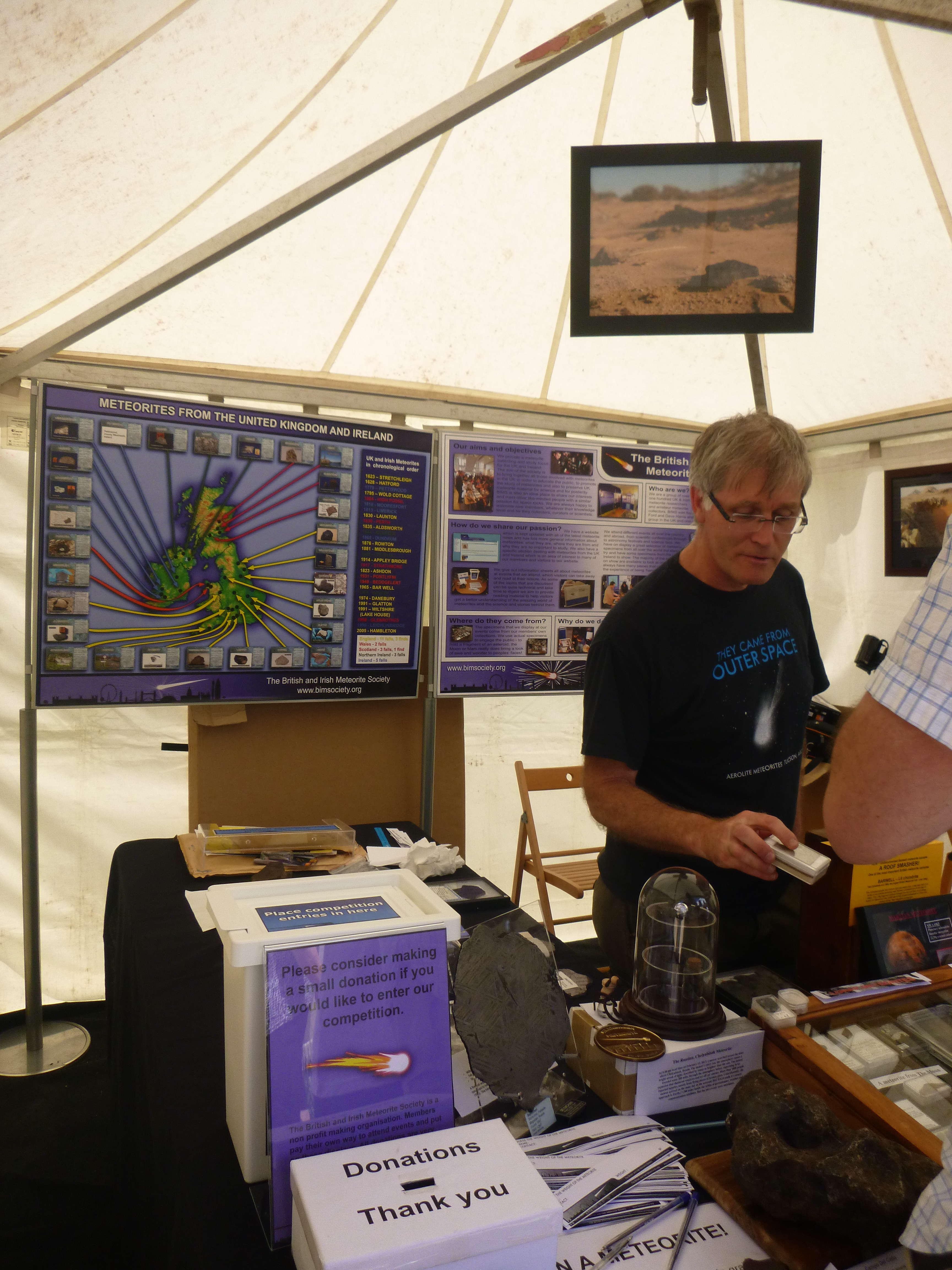
Even rooocckkks from spaaaaaaceeee!

Even rooocckkks from spaaaaaaceeee!

All signs leads to science!

All signs lead to science!

Where is the line between academic criticism and personal attack?

As an academic, you expect criticism (and no, not from my parents about getting a ‘real job’, they are very supportive!). In a way, it’s kind of your job to both give and receive criticism of the research that you read, but recently I have been wondering about the line between criticism and personal attack. Whilst at the EGU Conference, I was shocked to attend a session where a member of the audience attacked a young researcher, calling her research ‘trivial’. This experience was surprising to me, because up until that point I had seen and been involved in many debates about different reserach, but never had one been addressed with such apparent vitriol. Now I didn’t know either of the researchers involved, so perhaps there was a personal relationship at work there, but nevertheless, it seemed really unprofessional – where was the constructive aspect that, if you thought the research was substandard, could move it forward and improve it? Isn’t that the point?

20140608-111832-40712511.jpg

A possible reason for conflict could be in the difference between an experimental researcher and a computational reseracher, but the question I would ask then is, in that case does the one have any right to critically assess the other, without at least an attempt at understanding? And in that circumstance of an open debate, should you have another method of expressing your feedback if you are not an expert in that area? I say this with trepidation, because I personally am of the opinion that anyone should have the opportunity to comment on scientific research, whatever their background and area of expertise, and some of my best advice has come from researchers outside my field. Having said that, all of that advice was offered constructively and with good intentions.

But possible ‘attack’ rather than criticism doesn’t just occur between researchers from different fields. I recently saw another example of the blurred line between academic criticism and personal attack at a seminar I attended, where a young researcher was critiqued in increasingly aggressive and dismissive language by a more established member of the staff. This at least started out as genuine criticism, but when the researcher tried to defend their evidence in the face of an alternative interpretation, the staff member replied with increasing hostility. Now, in this case, although both academics were in the same field, one was older and more established, but the second academic was younger and had just won a prestigious grant, so perhaps there was a case of professional jealousy happening here. Still, I could only think of the other young researchers present, like myself, who were perhaps thinking – I don’t want to subject myself to this!
20140608-112854-41334776.jpg
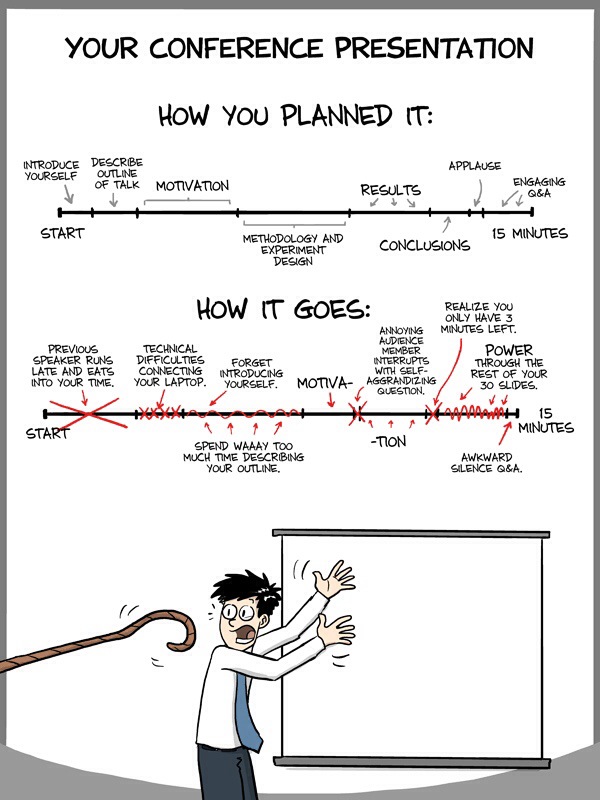
A PhD Comic about presenting at a conference that in many cases is scarily accurate…!

Now I have to make it clear here, I am in no way against the current method of presenting your results for criticism. Without an open and transparent way to examine each other’s data – how can we avoid scientific research from become corrupt? What I think needs to change is the way that those few researchers who respond aggressively are treated themselves in the scientific community. In the same way as misbehaviour is treated in the workplace, personal attacks should be banned in scientific conferences and seminars. Those who let their criticism slide into attack should be given a warning that they will not be allowed to comment again if this continues, and moderators should be very clear that this kind of behaviour is not tolerated. I will at this point say that in both circumstances I observed, the moderators were very good at defending the presenter in the firing line, but I still felt that there was a general acceptance of this behaviour, because it was seen as criticism. One of the hardest things to do as a scientist is to remove your personal feelings from your data as much as possible and this HAS to carry over to criticism as well.

A concerning flip side of this coin is the willingness of academics and researchers to present new and possibly controversial ideas. If you feel confident that it is only your data and results that will be questioned then you will be happy to submit your idea for criticism, as you would hope that concerns will either be answered or will reveal any weaknesses in your idea that you can address. However, if you feel that you yourself will become the subject of the criticism, most people – understandably – would not want to put themselves in that position and so would possibly not present their idea in the same way. It makes me think of all of those scientific discoveries that took decades to see the light of the scientific community because the authors were afraid of how they would be received. You only have to look at Charles Darwin to see how fear can control scientific data.

It’s a tricky topic – criticism is vital to keep scientists moving forward (and honest!), but when criticism becomes attack it can stifle scientific creativity. How do we balance the two? I feel like I should finish with a line from a show that really introduced the idea of combining constructive criticism and personal attack – The Jerry Springer Show:

“Until next time, take care of yourself – and each other.”

Farming for energy – do solar and geothermal power have a place in a modern farming landscape?

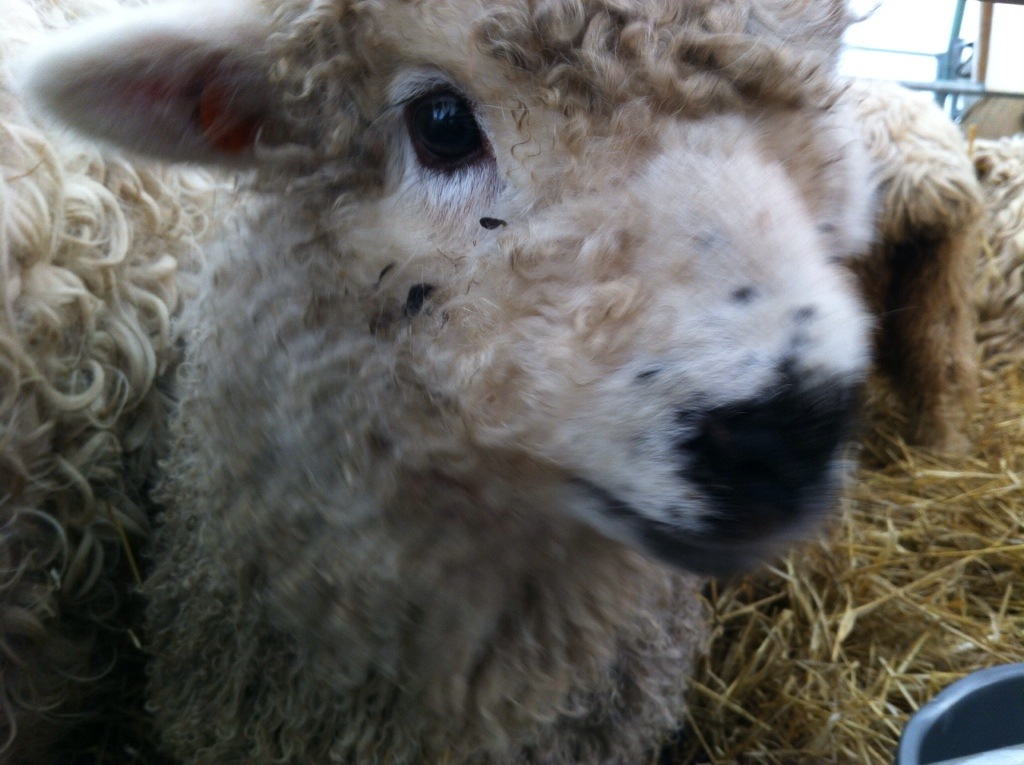
On Friday I attended the Devon County Show, at Clyst St Mary outside Exeter. Now I love the Show, and try and attend as often as possible. I love the crafts, the gardening, the livestock (I have a special place in my heart for the heavy horses and the Dartmoor Grey-faced sheep), but this year I was looking for something else – I was looking for energy.

20140525-193509-70509768.jpg

In the last 6 months I have begun to notice just how many onshore wind and solar farms there are near me and having an interest in geothermal power I wanted to see if this move into farming energy was represented at the county’s biggest exhibition of farming and rural life. What I found was pretty interesting. Energy farming was present at the show, but the largest contribution was for solar.

20140525-180820-65300138.jpg

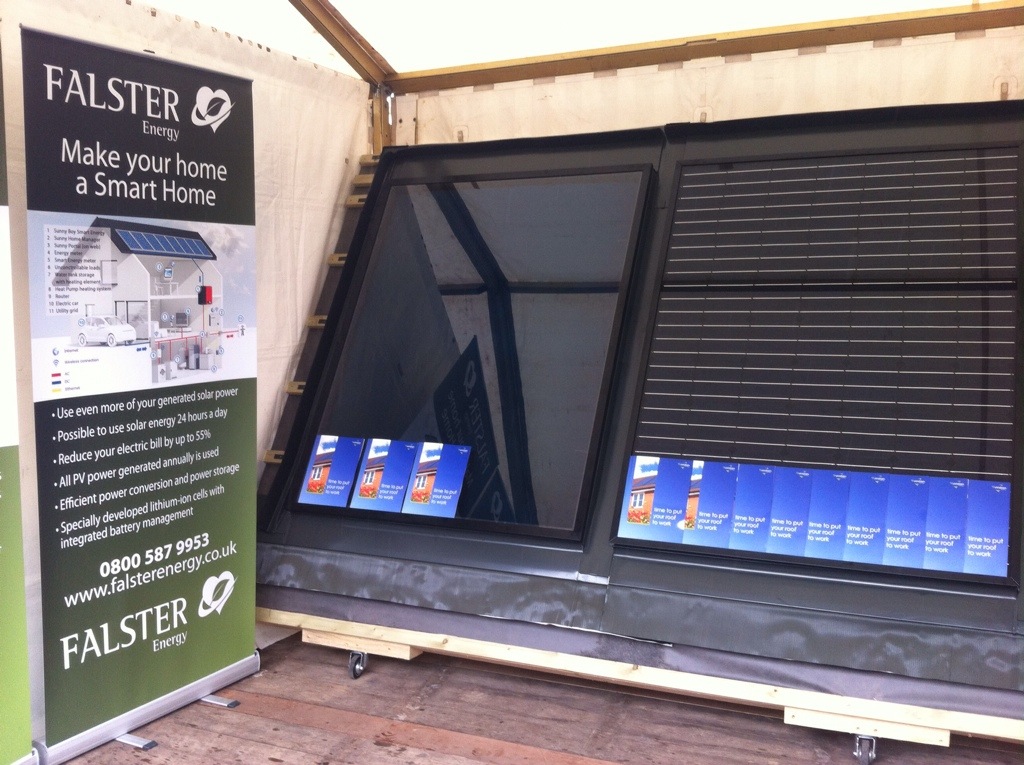
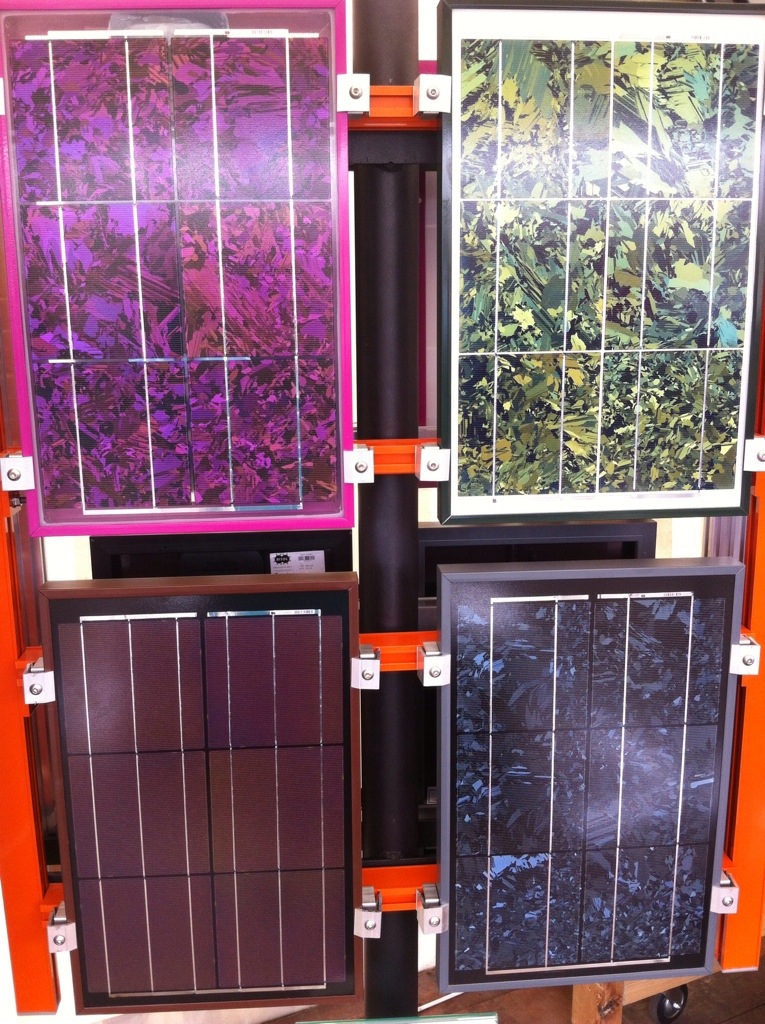
I spoke to one of the companies – Faltser Energy – about the use of solar by consumers in Devon. The sales representative, Greg Hockin, told me that it was a pretty mixed portfolio, especially for their company. A lot of products were for individual installations, but they also supplied to farms, most often as a supplement to activities (i.e. on a barn roof) than as a revenue generator. He also mentioned that they had developed a technique to colour the panels – something I had never seen! I understood the green or the blue, but pink solar panels?!? Seems a bit like an extreme choice for me!!

20140525-181343-65623475.jpg

Another thing that Mr Hockin mentioned is that all the panels were made in the UK. When I questioned him further, he did clarify that by saying that many of the components would be made overseas, for instance in China, then assembled in the UK and that got me to thinking about what a solar panel is actually made from….

20140525-181800-65880109.jpg

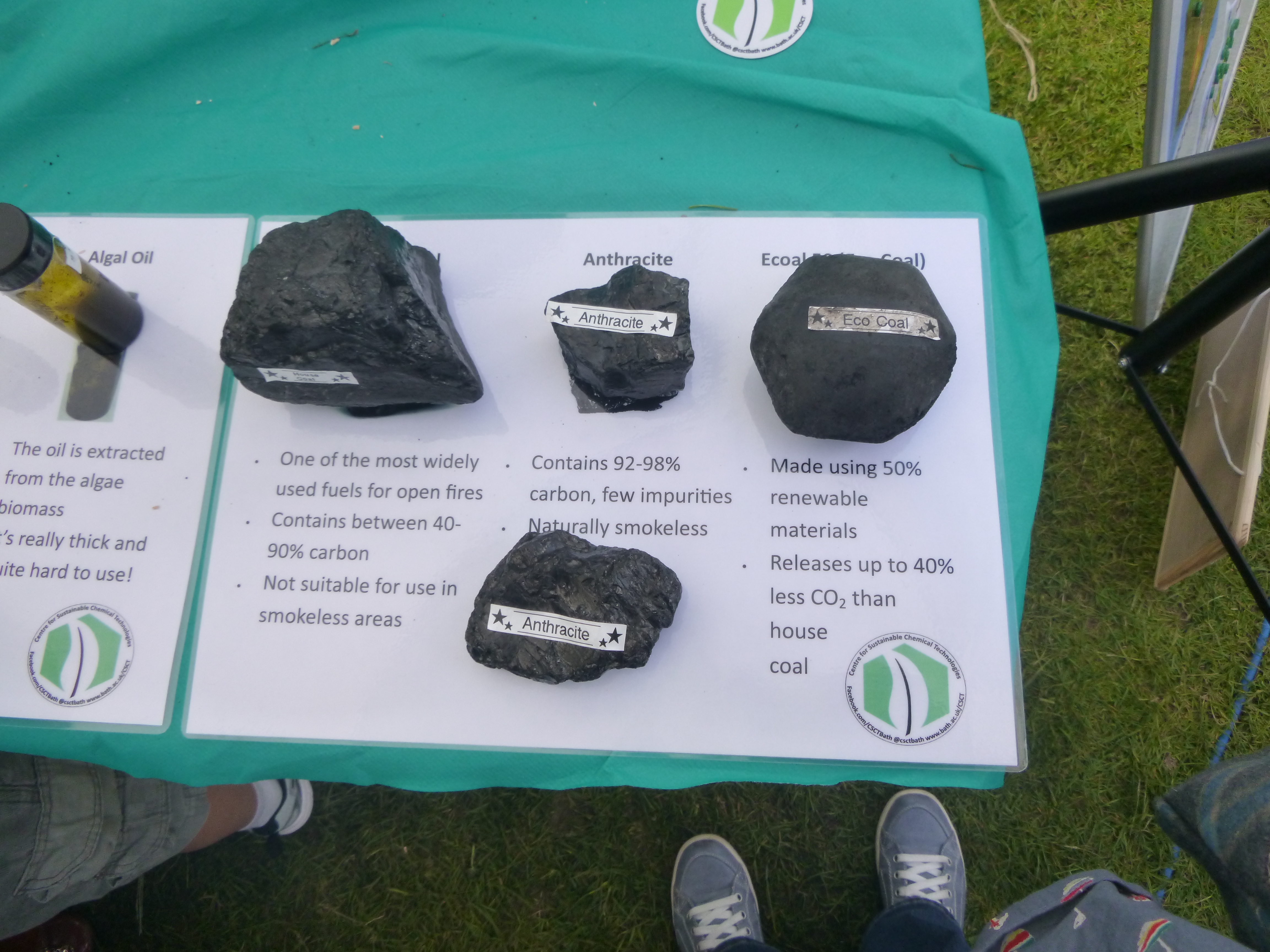
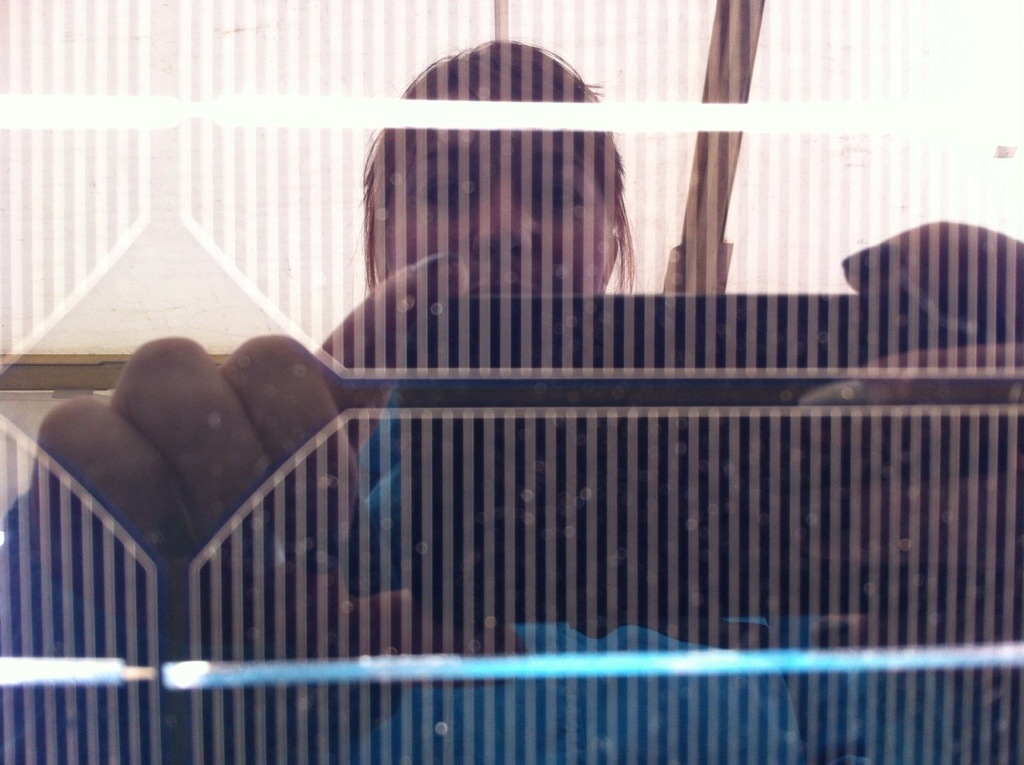
I’ve never really had a close look at a solar panel, but when you get near you can really see the crystalline structure of the panel itself. Solar panels are usually made with silicon crystals which provide the pretty crystalline pattern. They usually have another mineral added into the mix to make them more efficient, such as gallium arsenide, cadmium telluride or copper indium diselenide. One tricky thing with these compounds is that the source elements are all listed as under moderate to high risk on the British Geological Survey’s ‘Risk List‘, a list that calculates the risk to the supply of economically important elements. For four of the elements used, the main producer and reserve holder is China. So with China having the monopoly on these mineral’s supply and on production of many of the component parts, how much can you really say is made in Britain? And if we had to, could we make solar panels entirely from British products? Well the simple answer is probably not. Although you can find many of these elements in their mineral forms in the UK either as an ore or a byproduct of processing that ore – none of them exist in quantities large enough to mine commercially anymore – our reserves are depleted.

An ore rock of Gallium.

Gallite – an ore rock of Gallium.

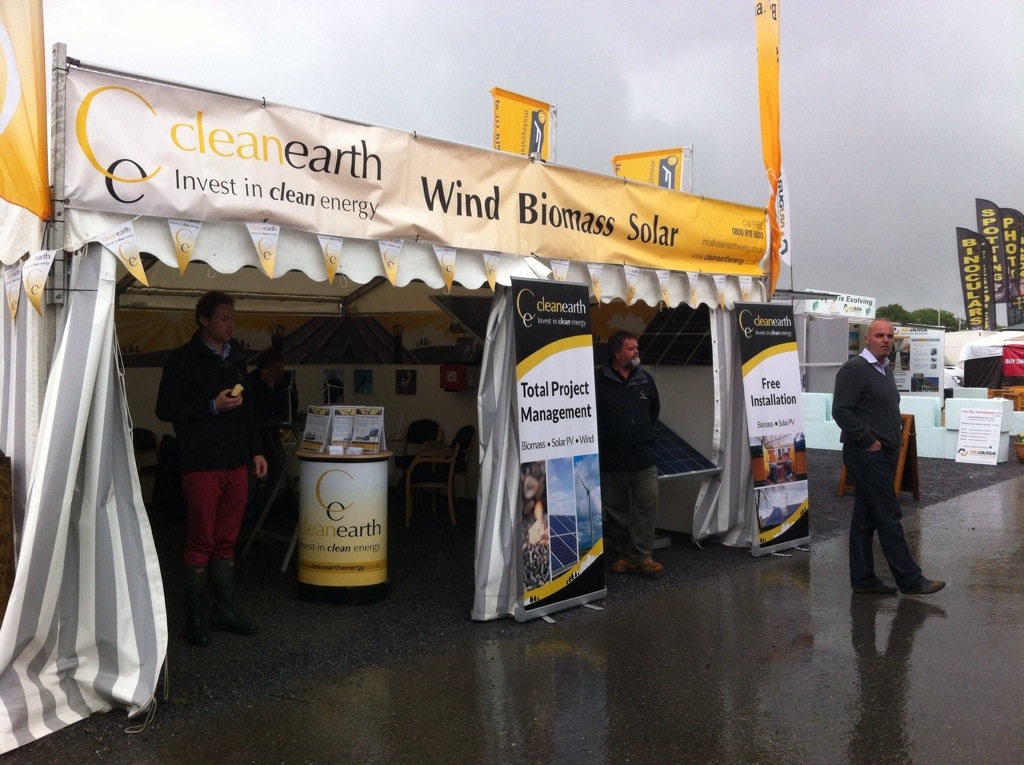
So do we have another option? Well, although solar power is great, I have great faith in the future of geothermal, and at the Clean Earth stand, I met a young man, whose parents have adopted geothermal power on their farm in an interesting way. At Clean Earth, they are involved in leasing land from farmers to create energy farms – be it solar, wind or biomass. They have a number of success stories around the south west (anyone from down here may know about Crealy Adventure Park? They now have 2020 solar panels to supplement the Park’s use of energy from the National Grid), but I was most interested to hear about Mesmear Farm in Cornwall.

20140525-191056-69056699.jpg

At Mesmear, the Roses have combined a geothermal powered heat pump with solar panels to provide heat and electricity to the farm and the rental cottages they maintain. The geothermal heat pump makes use of the farms proximity to the massive granite batholith nearby and heats water to around 50°C for space heating and hot water from a ground temperature of about 11°C.

To me this was an innovative use of combining a tried and tested (but limited) method of electricity production – the solar panels – with a new and innovative, but untested method of heat and energy production – the geothermal. The farm still draws from the National Grid, but only at times of peak requirement and it’s carbon footprint is much smaller. It makes me wonder how many farms, business and households across the South West (and in other areas where geothermal is an option) are using this low key, combined method of incorporating geothermal into their energy mix. I’d love to hear from you if you do!!

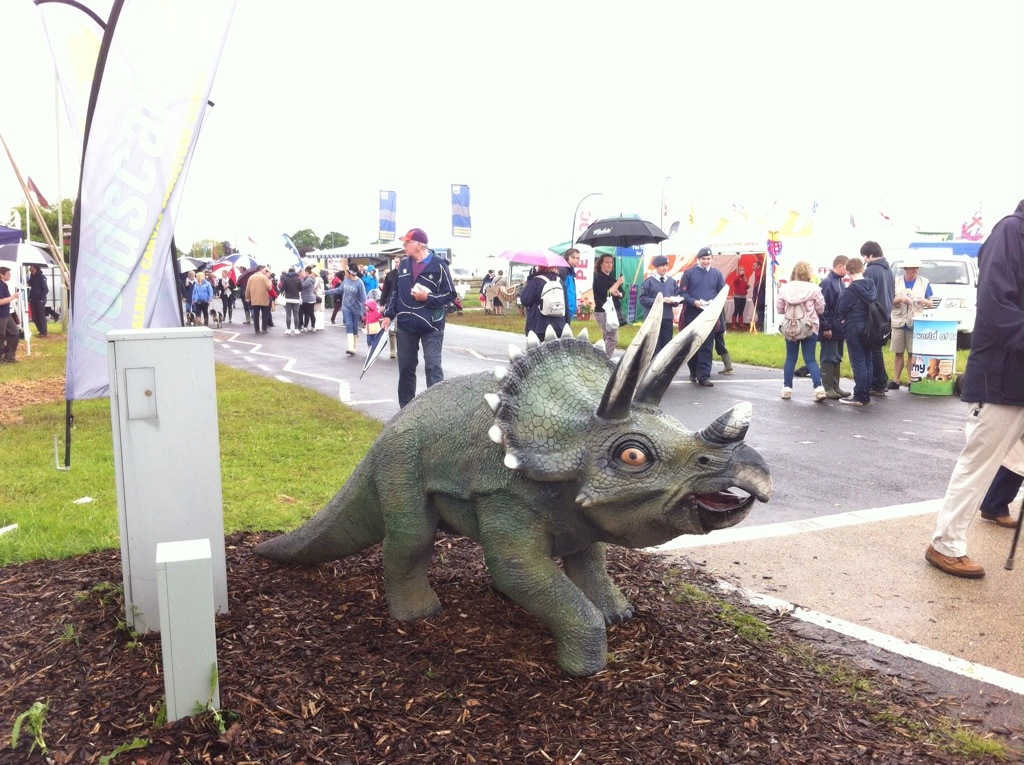
So there you have it, it’s easy to dismiss the Devon County Show as all mud and cows, but there are important things for geologists there too…. and the odd dinosaur!

20140525-192551-69951122.jpg

The Natural History Museum, Vienna

Whilst in Vienna I had a number of recommendations as to things that I should try and see during the conference. My mother, the art historian, suggested The Belvedere to see the Klimt paintings. My father, the hospitality expert, suggested visiting a Viennese coffee house. My supervisor, the experienced EGU delegate, suggested the Hundertwasserhaus (knowing that I appreciate interesting architecture). But the sad reality of going to a conference in a new city is that as much as you may want to explore the city itself, there is so much happening at the conference that you can hardly tear yourself away from that one building. That is what happened with me and EGU – with one exception, the Natural History Museum (or Naturhistorisches Museum Wien -NHMW).

A lovely sunny day - to spend in a Museum. Yeah I'm a nerd.

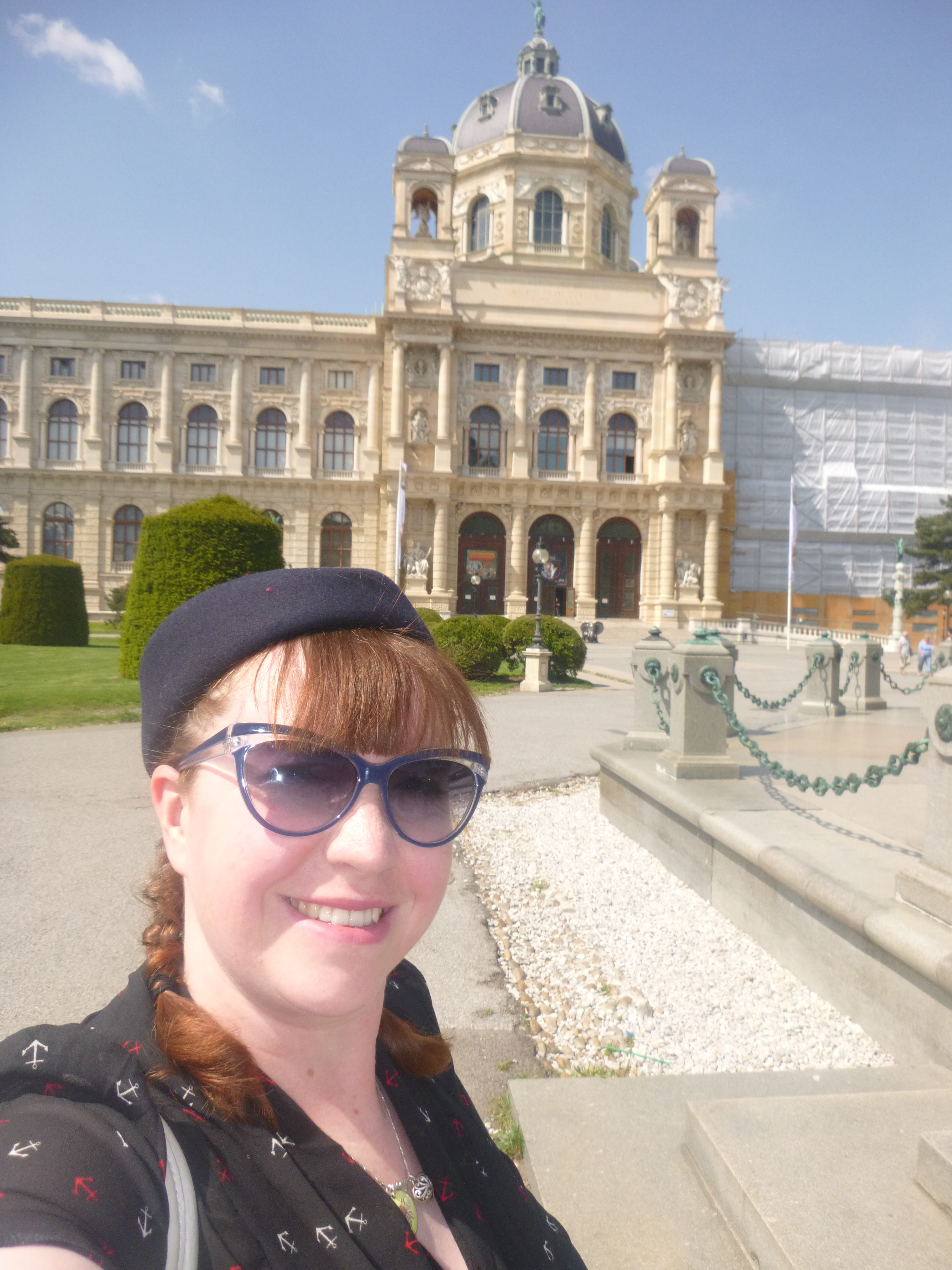
A lovely sunny day – to spend in a Museum. Yeah I’m a nerd.

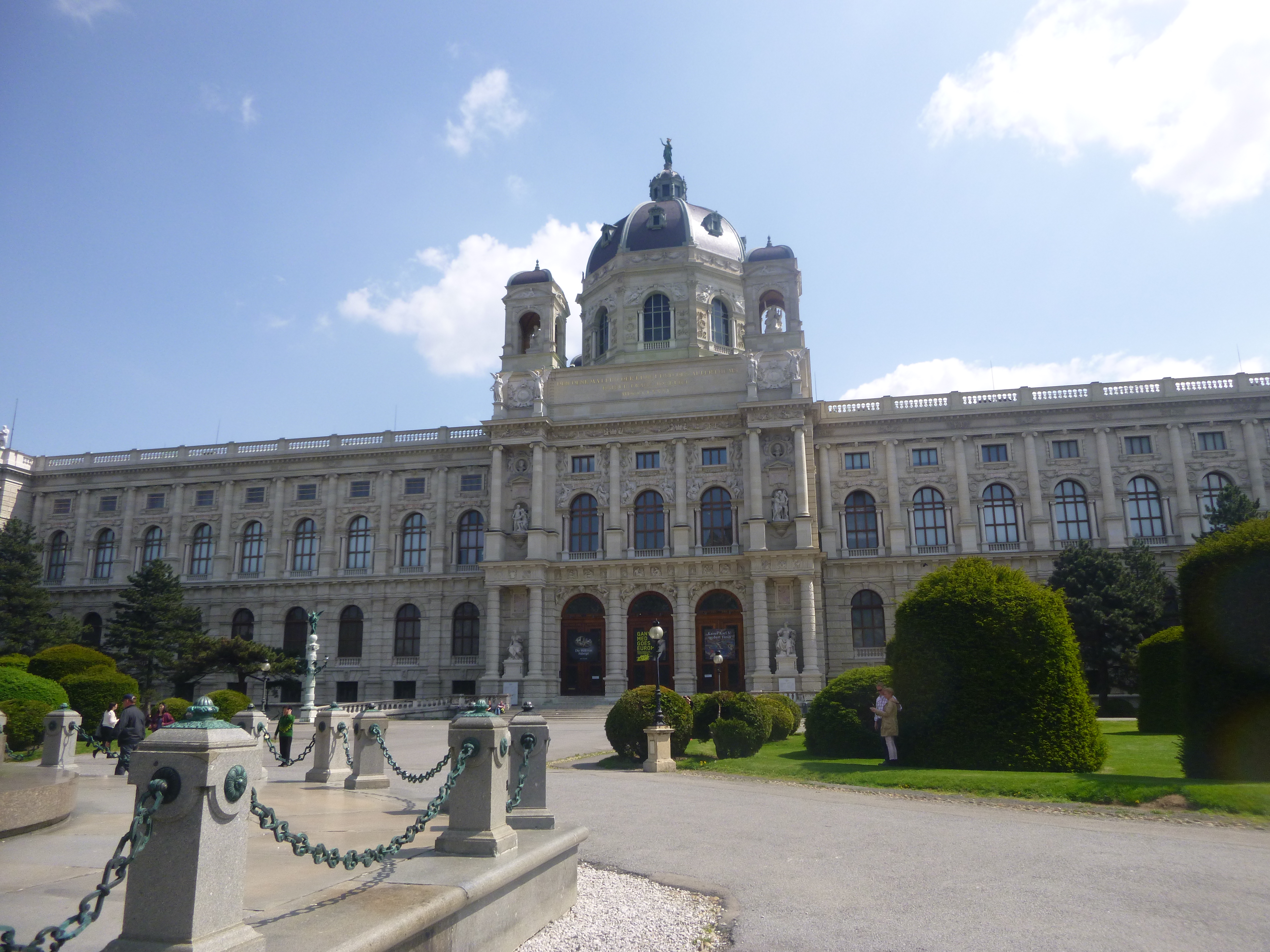
Now as a former employee of the NHM in London I have a strong appreciation for a good museum and the NHMW Vienna had been recommended to me by a few different people. To be honest, if I could only visit one thing in any city – a museum would probably win. So one afternoon, when I had a two hour gap, I hopped on the train to the Museums Quarter. The first thing I noticed was that the building itself was beautiful – but in the process of being cleaned. Half of it, therefore, was obscured by scaffolding. Luckily the museum opposite, the Museum of Art History (or Kunsthistorisches Museum) was uncovered and in a mirror image represented what the NHMW would normally look like.

The Museum of Art History

The Museum of Art History

The NHMW was guarded by ths cute little elephant!

The NHMW was guarded by ths cute little elephant!


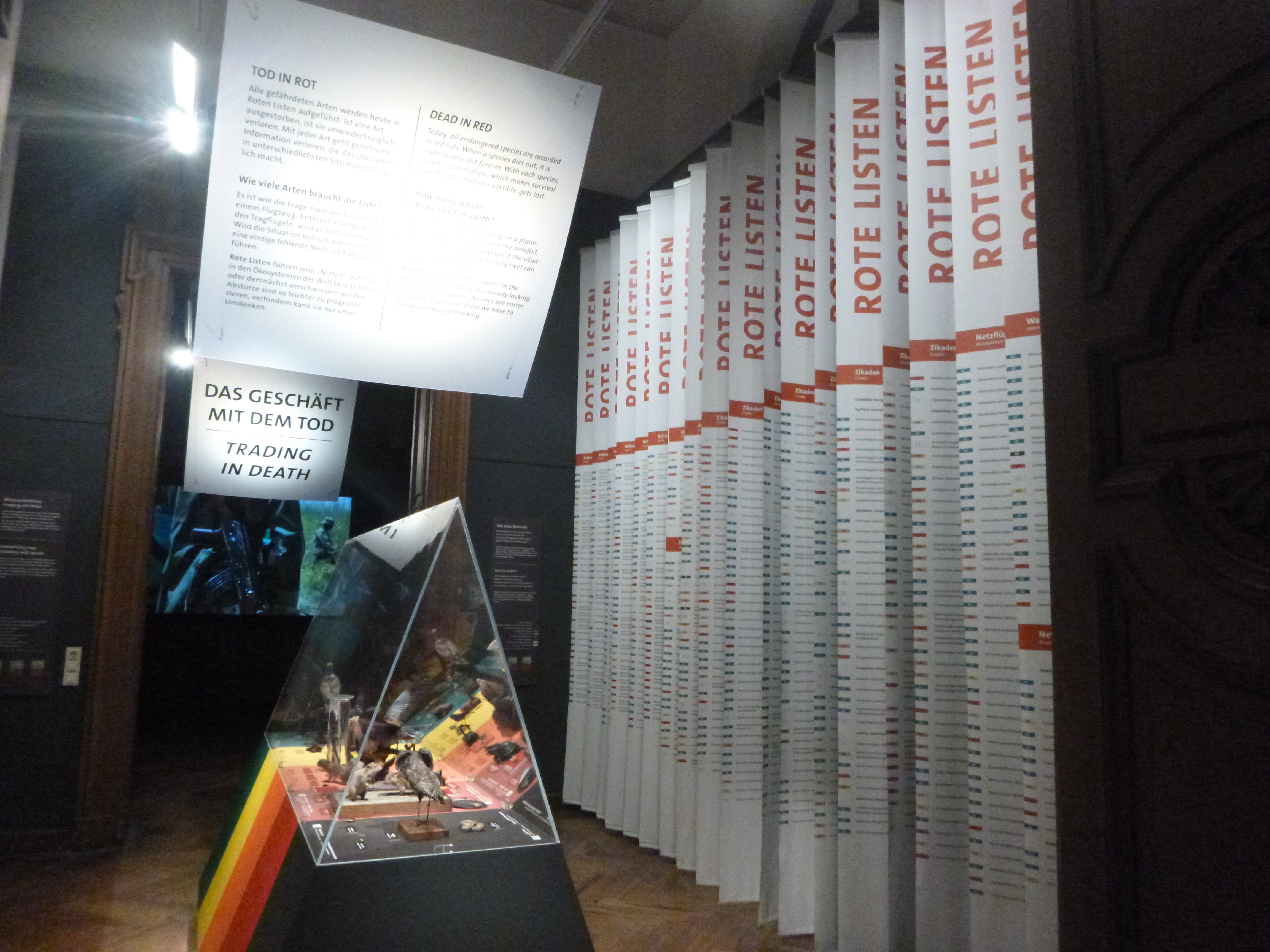
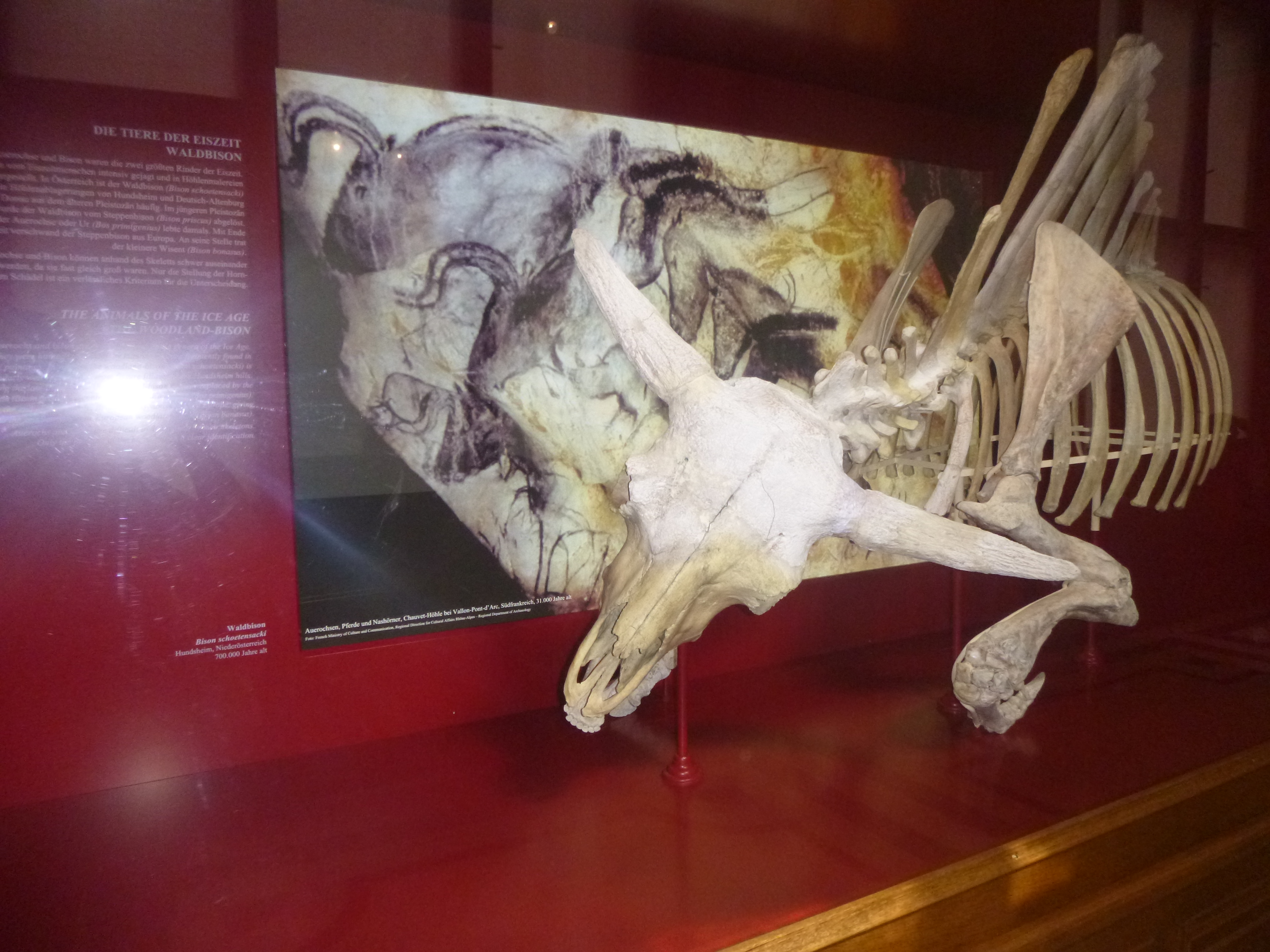
It cost €5 to get in (with a student discount) but that included entry to a special exhibition on Extinction. The Museum is divided between two levels, which can roughly divided into Life Sciences upstairs and Earth Sciences downstairs. One of the sections was closed for refurbishment; the human evolution and anthropology galleries, but to be honest, with only two hours, I couldn’t have done them justice anyway.

IT WAS FANTASTIC!!!!!

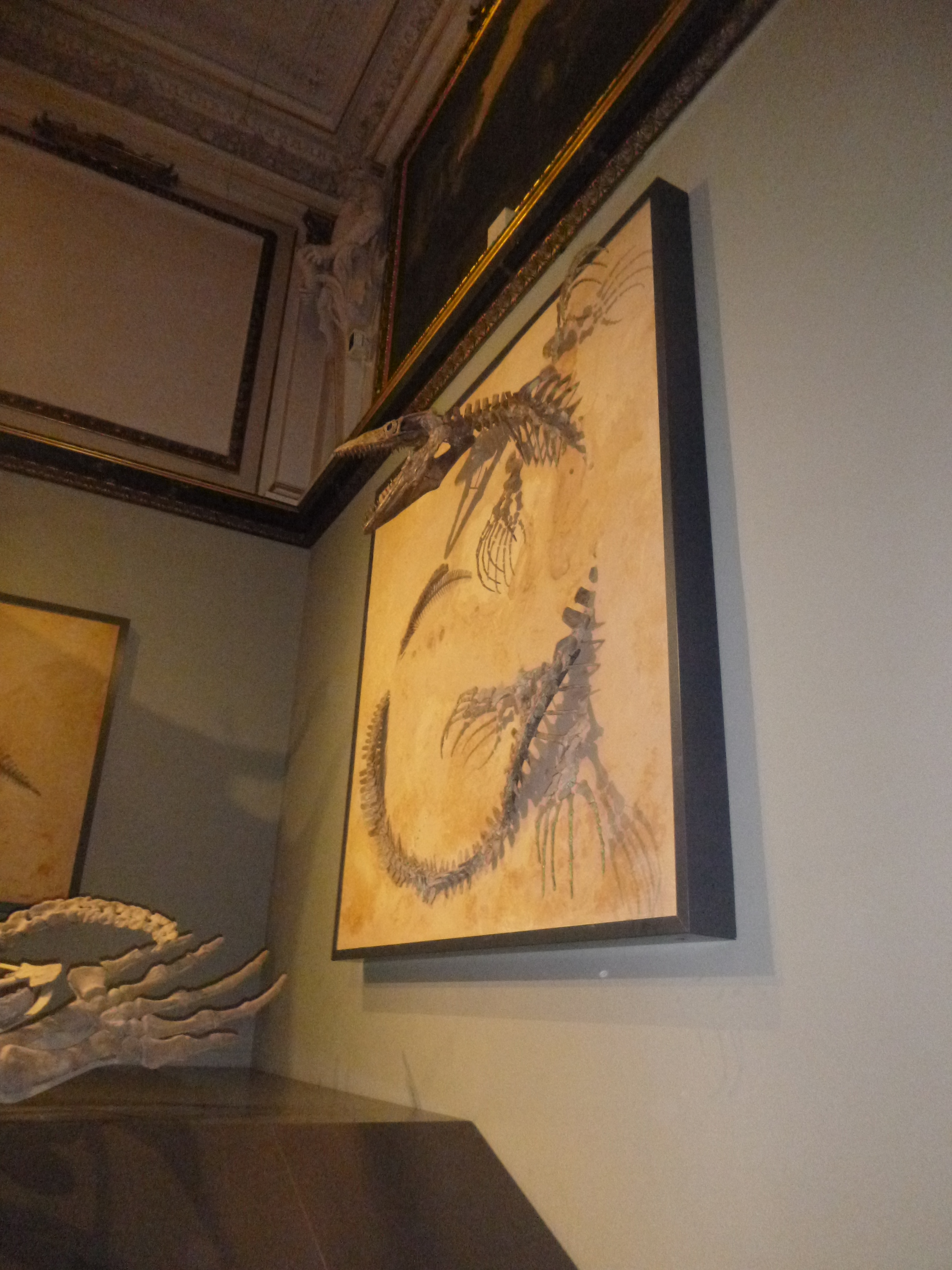
Below are a few photos to show just some of the brilliant things about this Museum, but there are so many more!

One great thing for me was that most signs were in German and English.

One great thing for me was that most signs were in German and English.

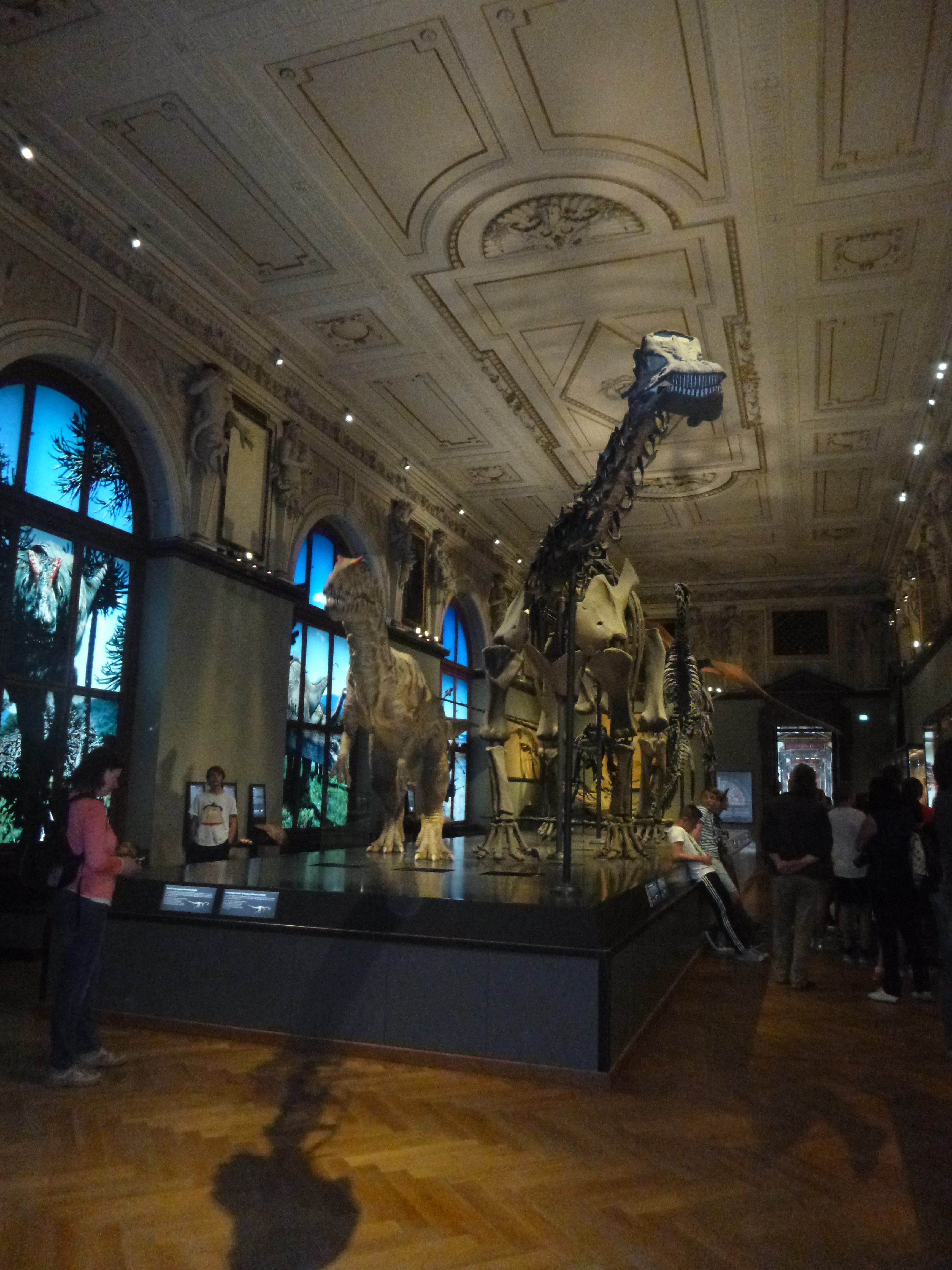
Just your average dinosaur gallery?

Just your average dinosaur gallery?

Not quite! Little details actually jumped out at you!

Not quite! Little details actually jumped out at you!

And they get extra points for having a feathered Deinonychus model!

And they get extra points for having a feathered Deinonychus model!

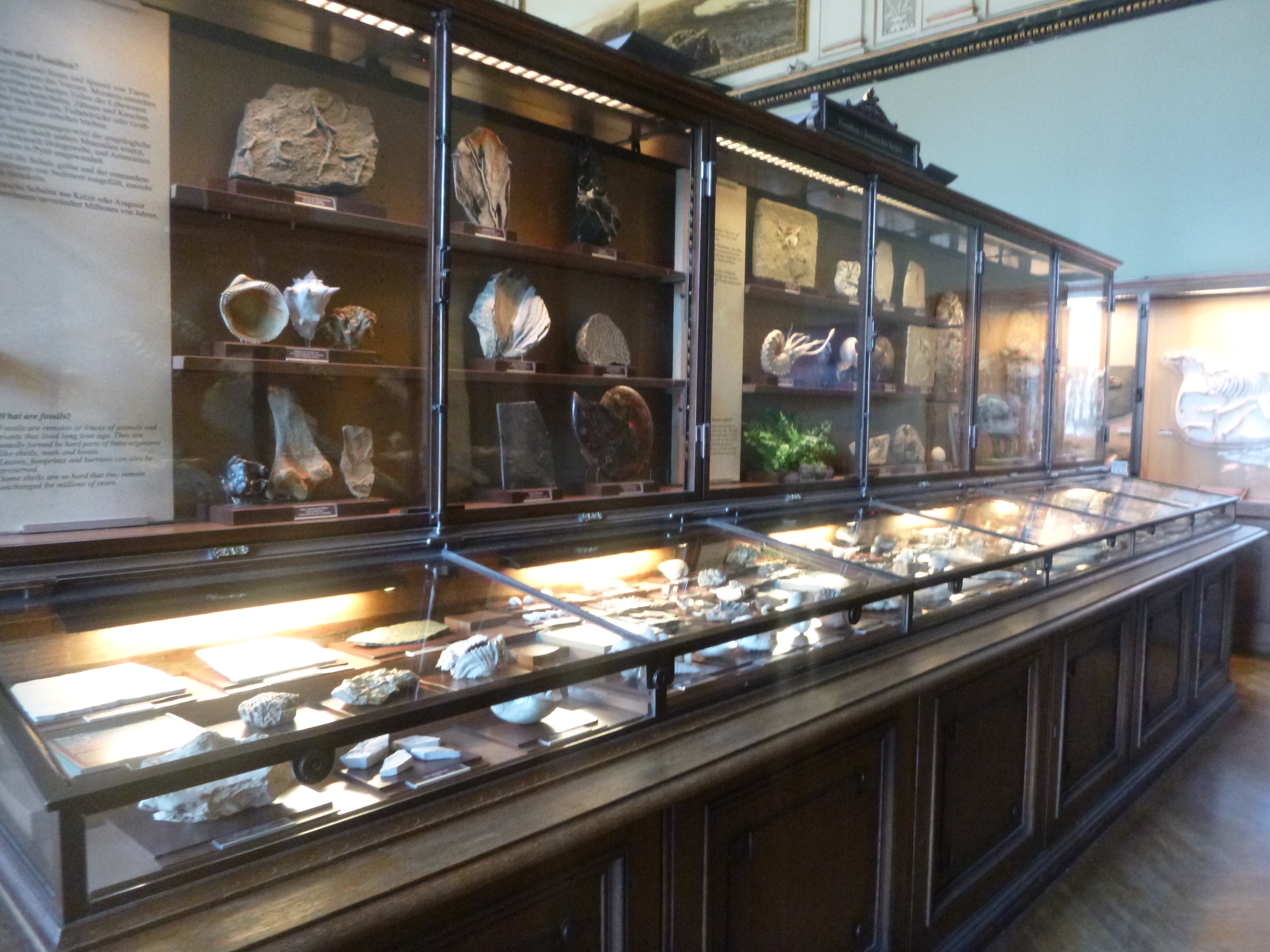
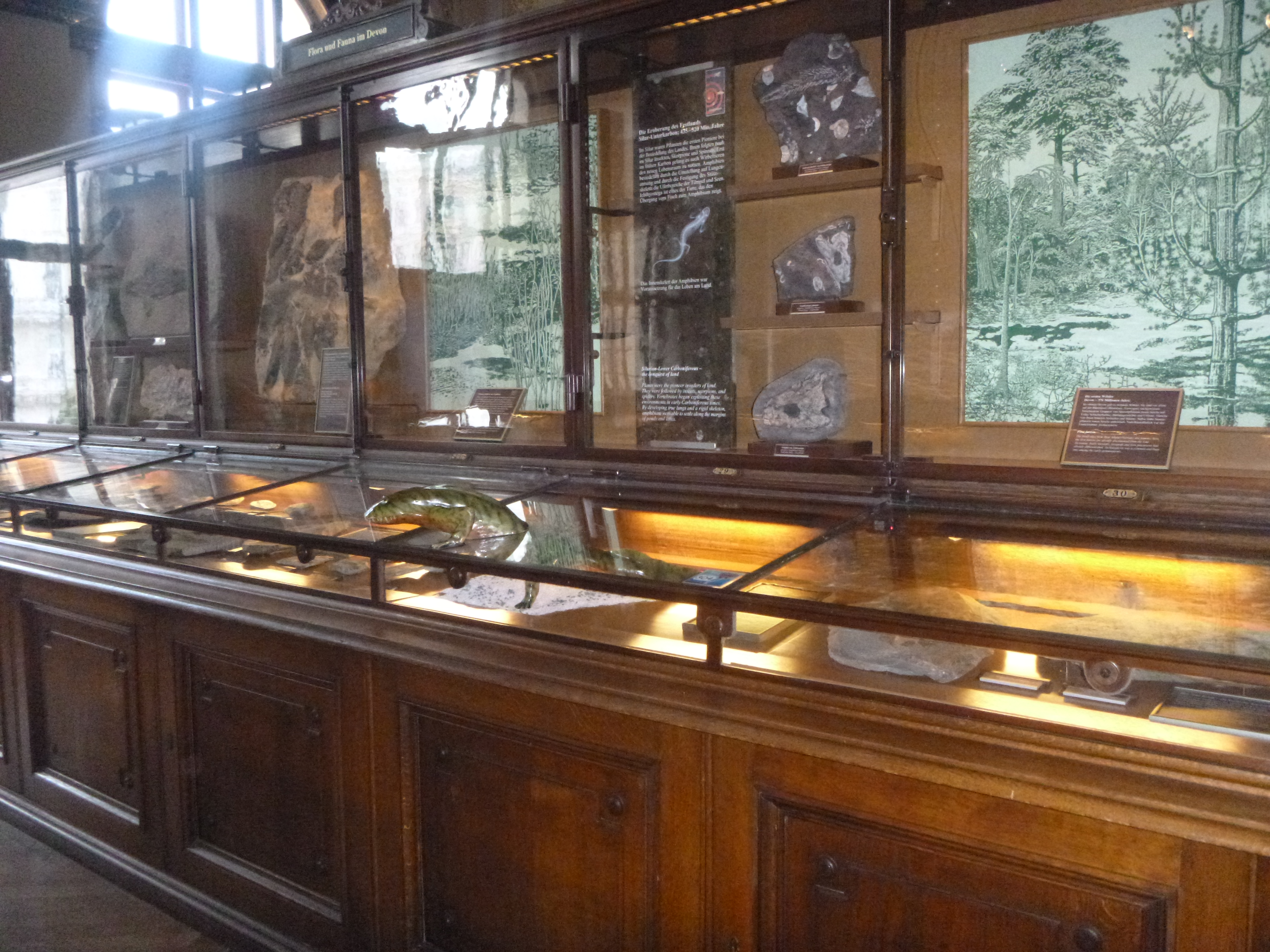
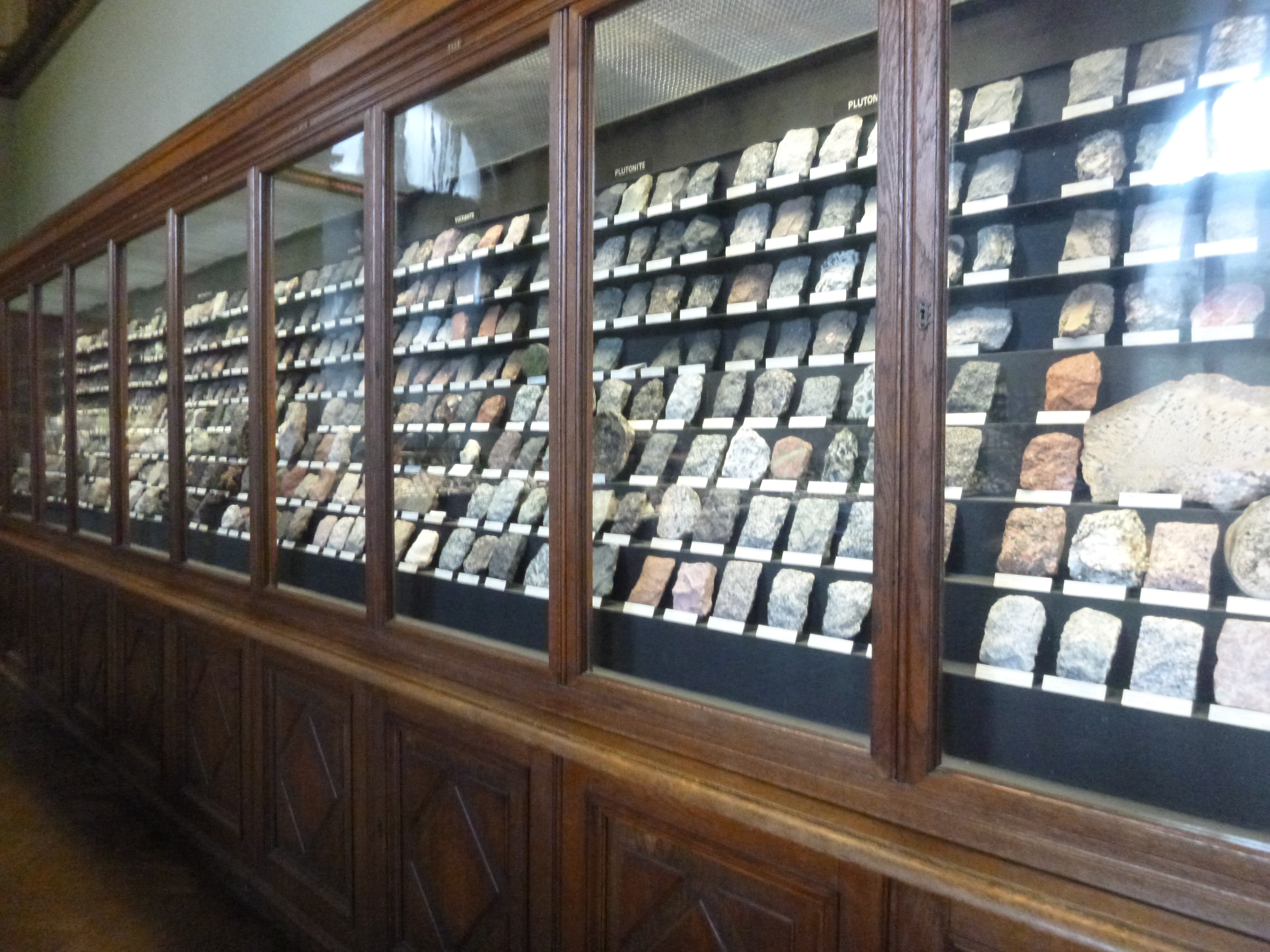
They have beautiful victorian display cabinets...

They have beautiful victorian display cabinets…

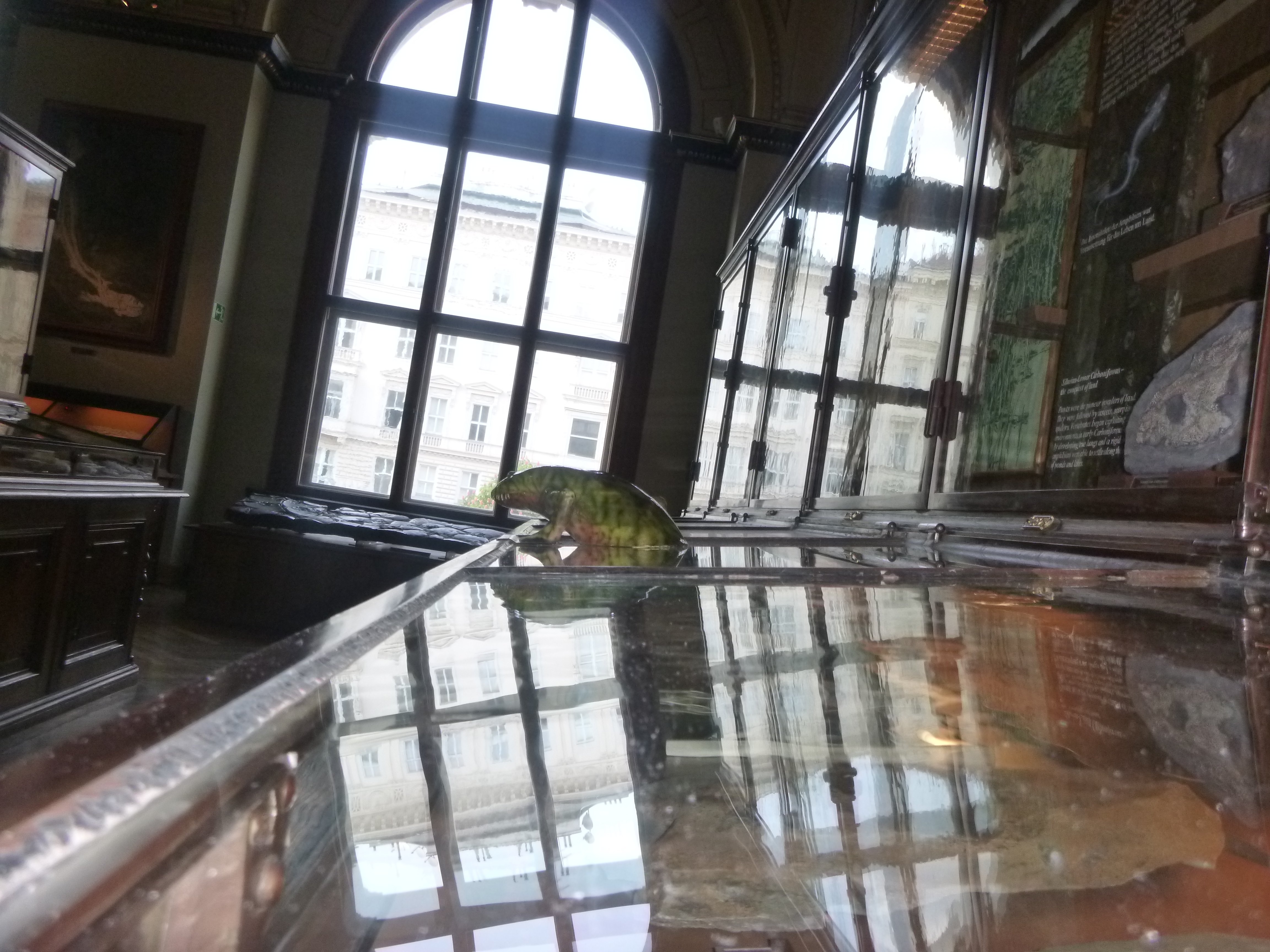
But even those are not always quite as they seem...

But even those are not always quite as they seem…

He is getting away!!!

He is getting away!!!

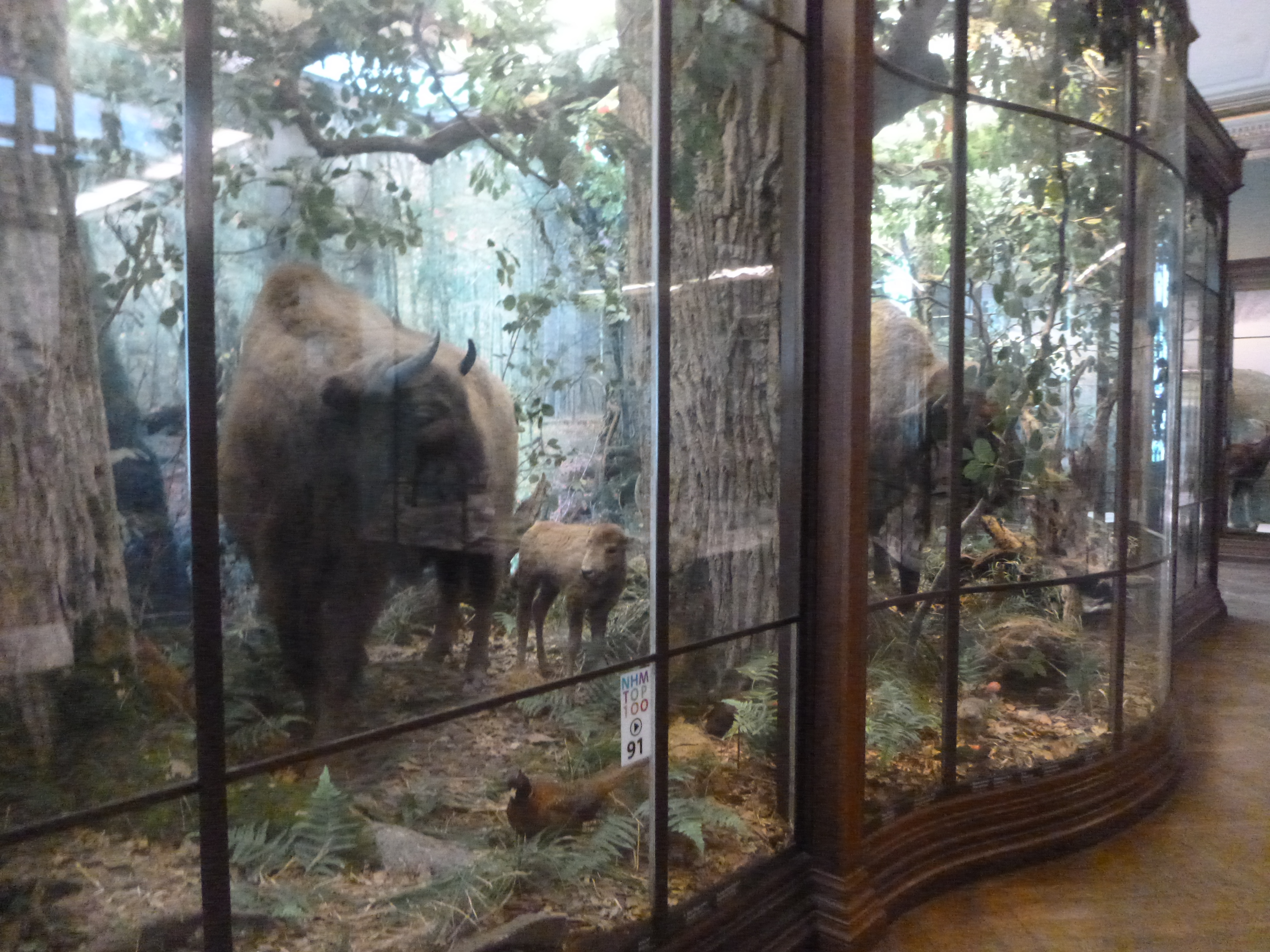
Dioramas were used to fantastic effect...

Dioramas were used to fantastic effect…

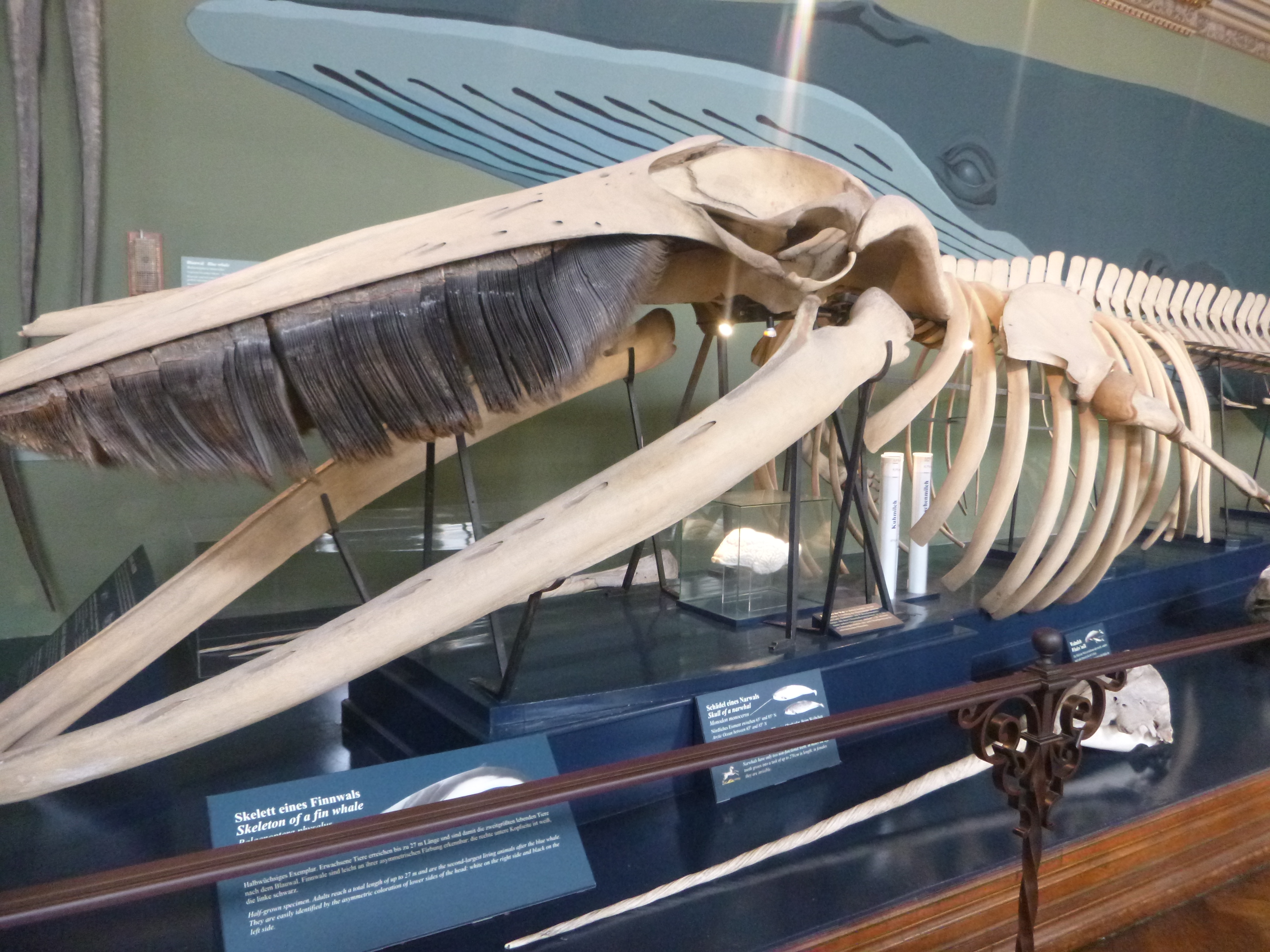
And objects were placed together that gave you new insight - look at the tiny white brain of this whale!

And objects were placed together that gave you new insight – look at the tiny white brain of this whale!

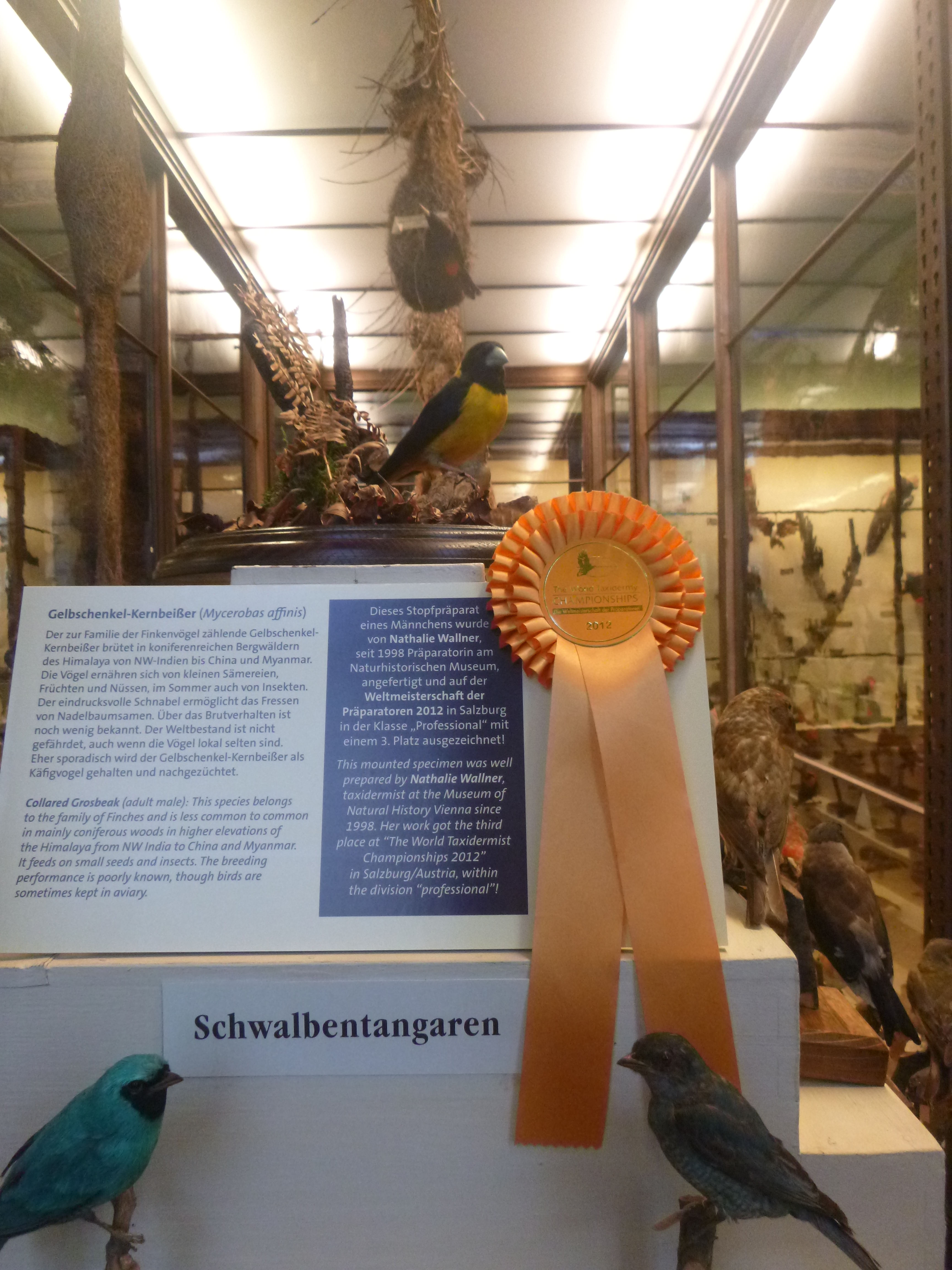
They even won prizes for their taxidermy and display - who knew you even could!?!

They even won prizes for their taxidermy and display – who knew you even could!?!

Every part of the building had been thought about. Even the windows were illustrated with microfossil drawings to emphasise their beauty.

Every part of the building had been thought about. Even the windows were illustrated with microfossil drawings to emphasise their beauty.

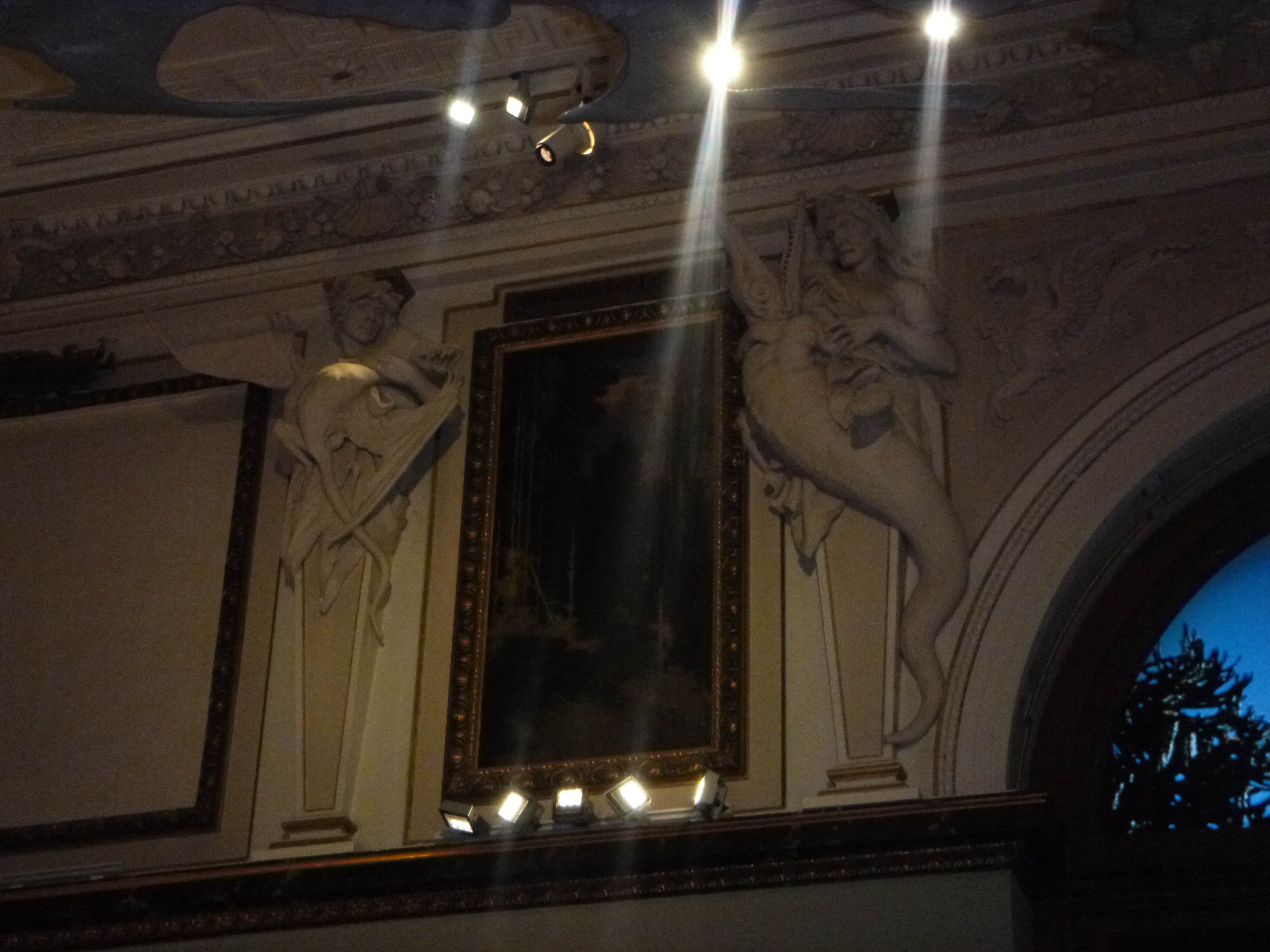
And the figures around the ceiling were just spectacular! And in case you were wondering - yes this does appear to be someone wrestling a pterodactyl next to someone with an icthyosaur tucked under their arm.

And the figures around the ceiling were just spectacular! And in case you were wondering – yes this does appear to be someone wrestling a pterodactyl next to someone with an icthyosaur tucked under their arm.

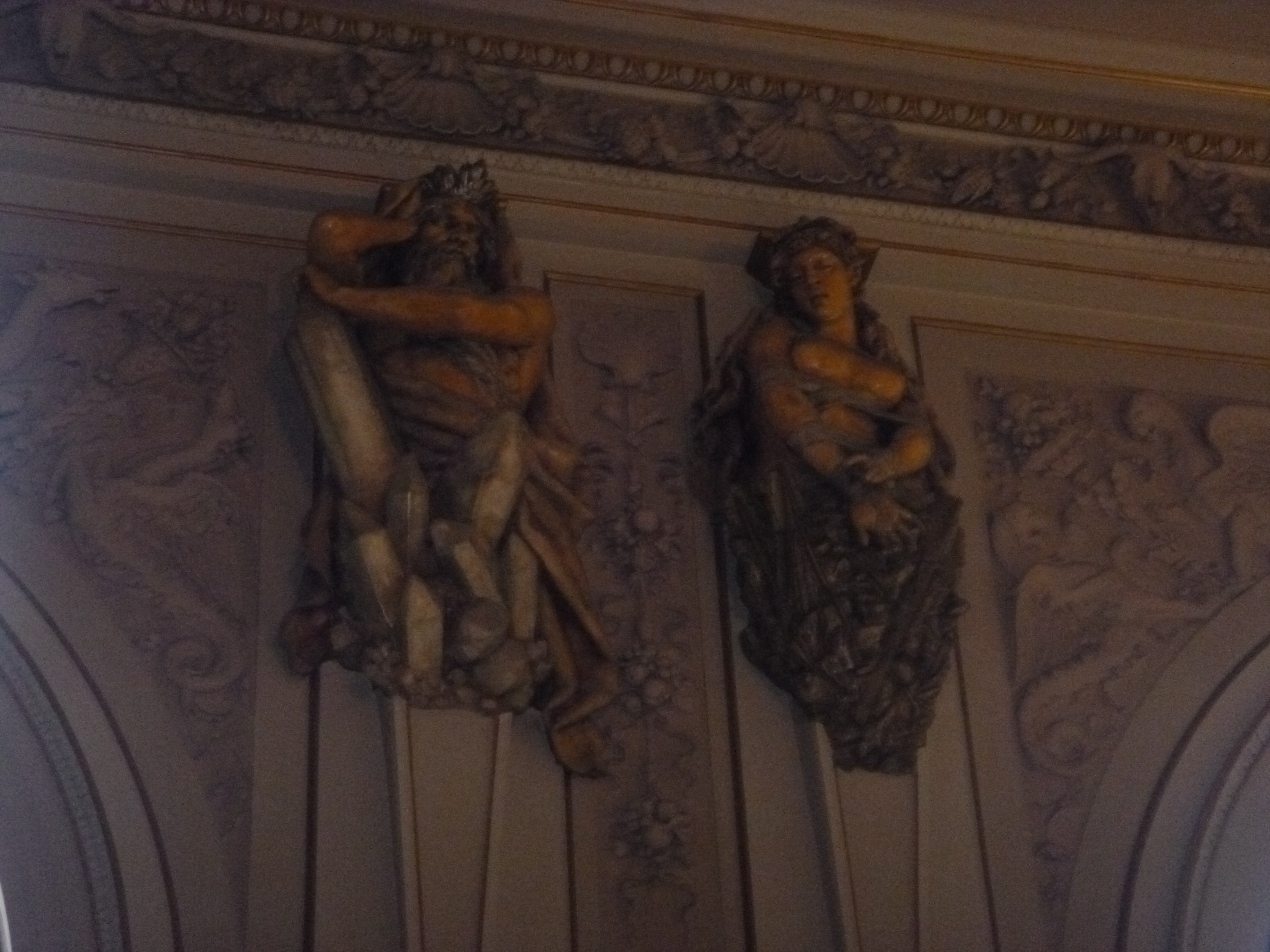
"*sigh* being a figurehead is SO TIRING. I'm just going to lean on this huge crystal conveniently covering my groin..."

“*sigh* being a figurehead is SO TIRING. I’m just going to lean on this huge crystal conveniently covering my groin…”

There were so many specimens...

There were so many specimens…

That I simply did not have time to see them all.

That I simply did not have time to see them all.

But one thing is clear....

But one thing is clear….

NHMW - I will be back!

NHMW – I will definitely be back!!!