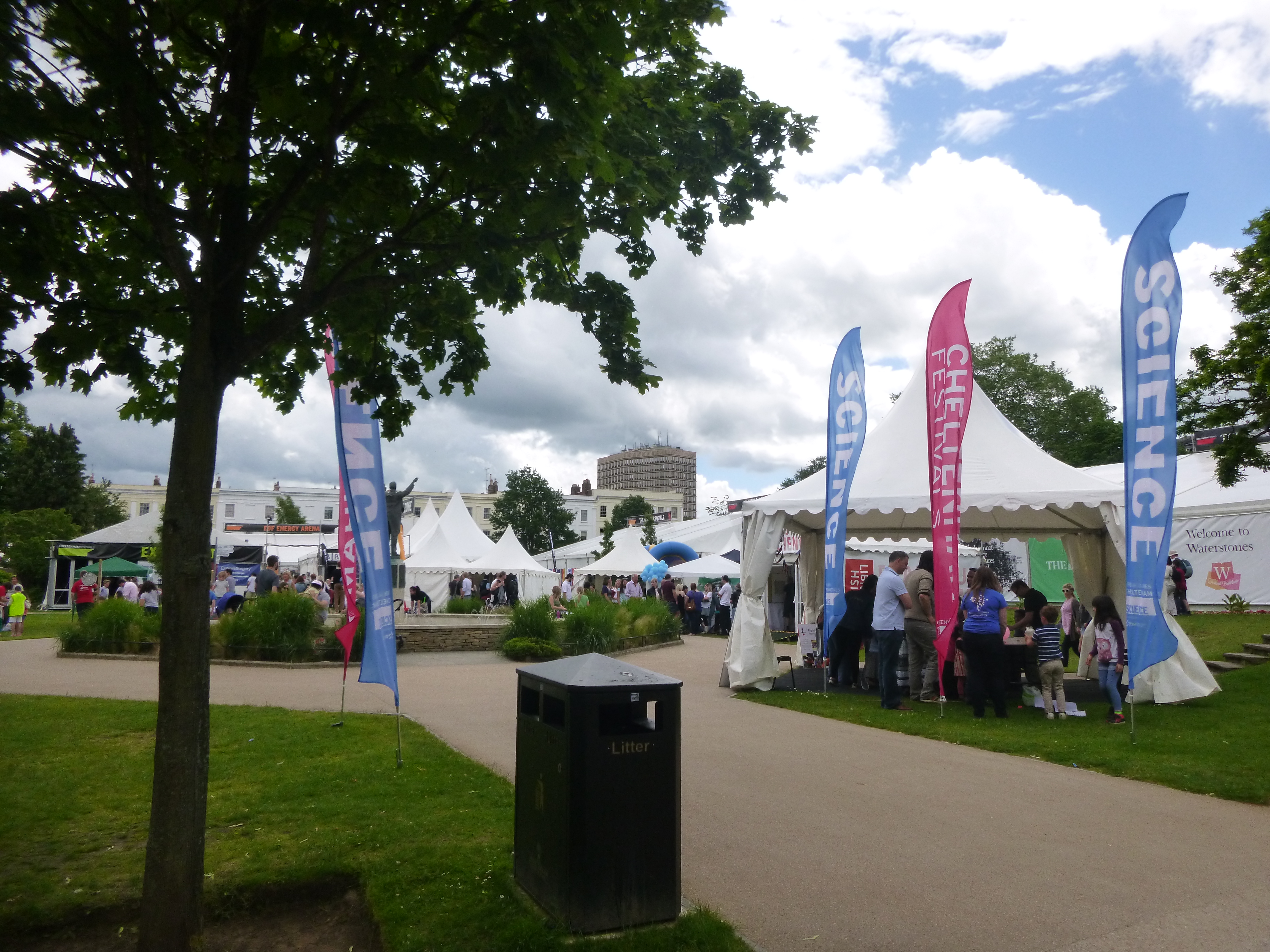
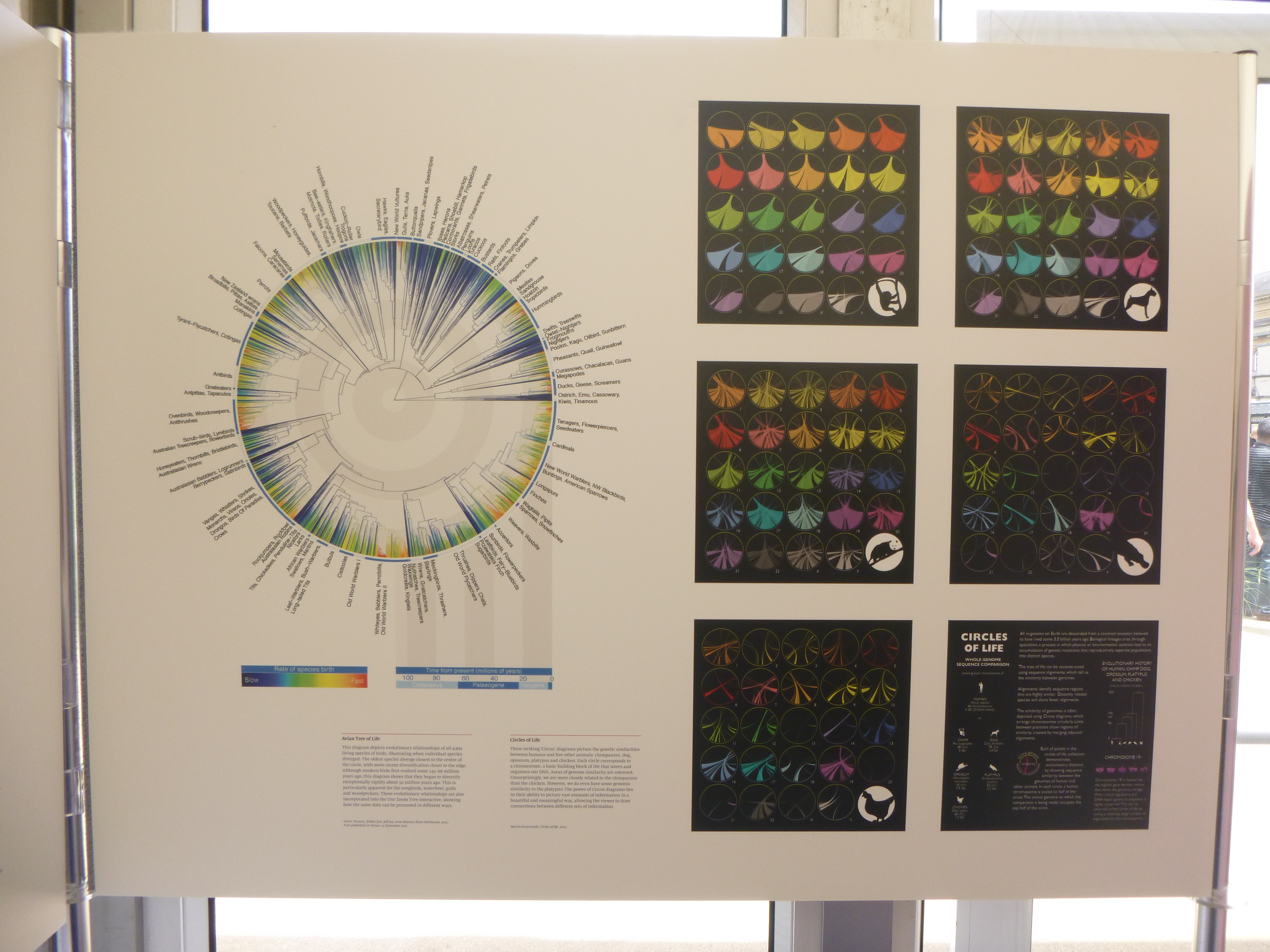
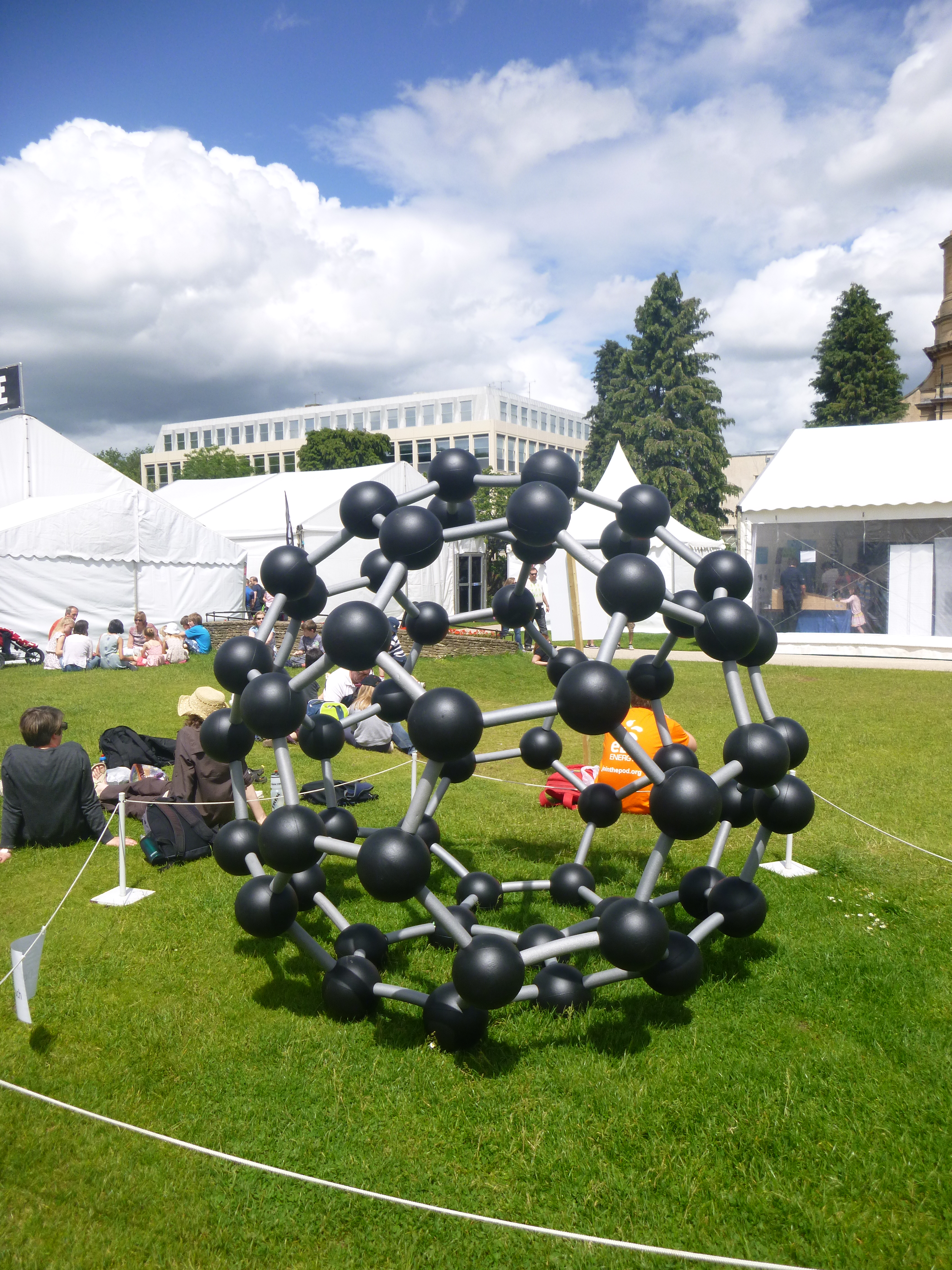
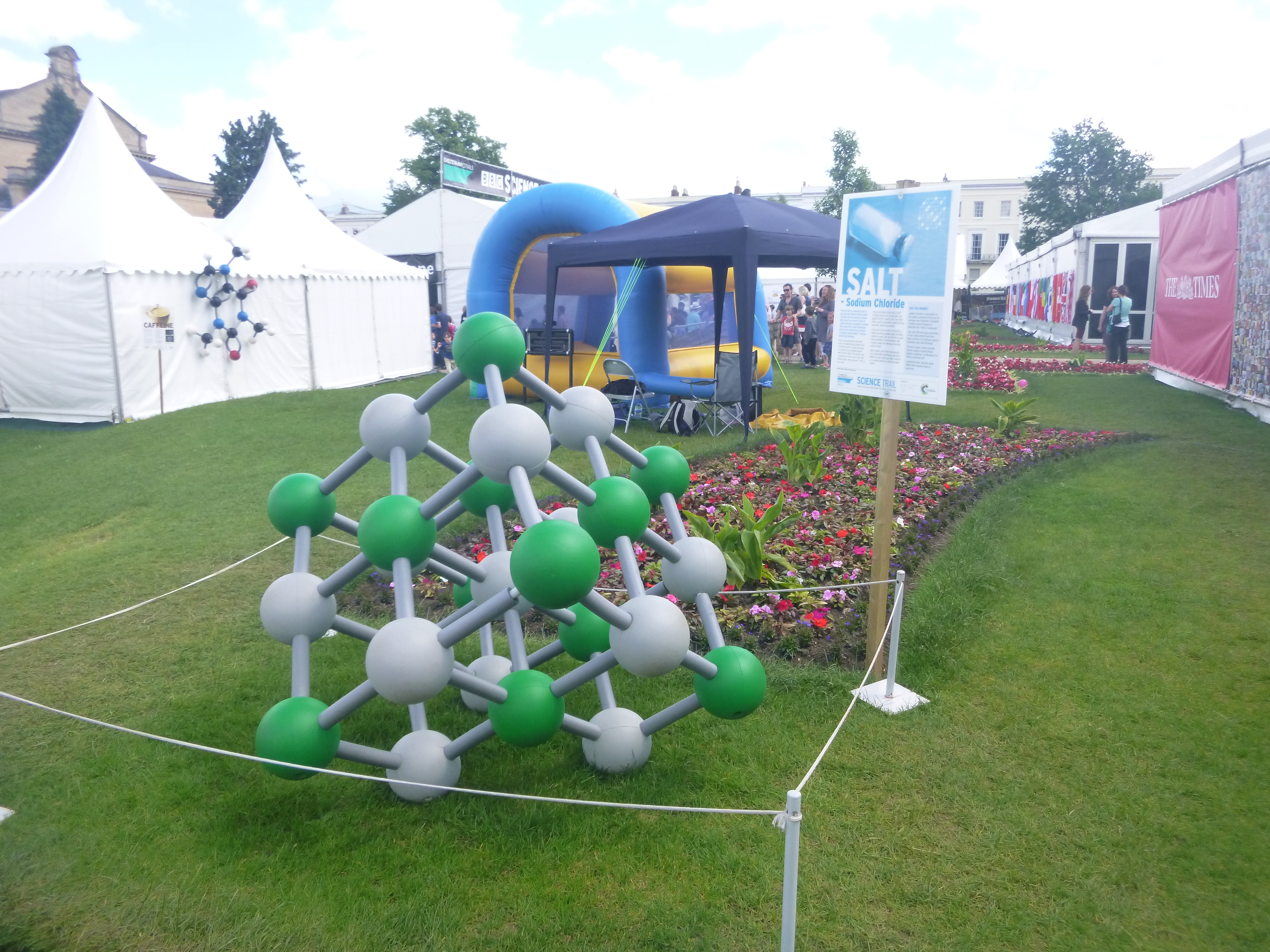
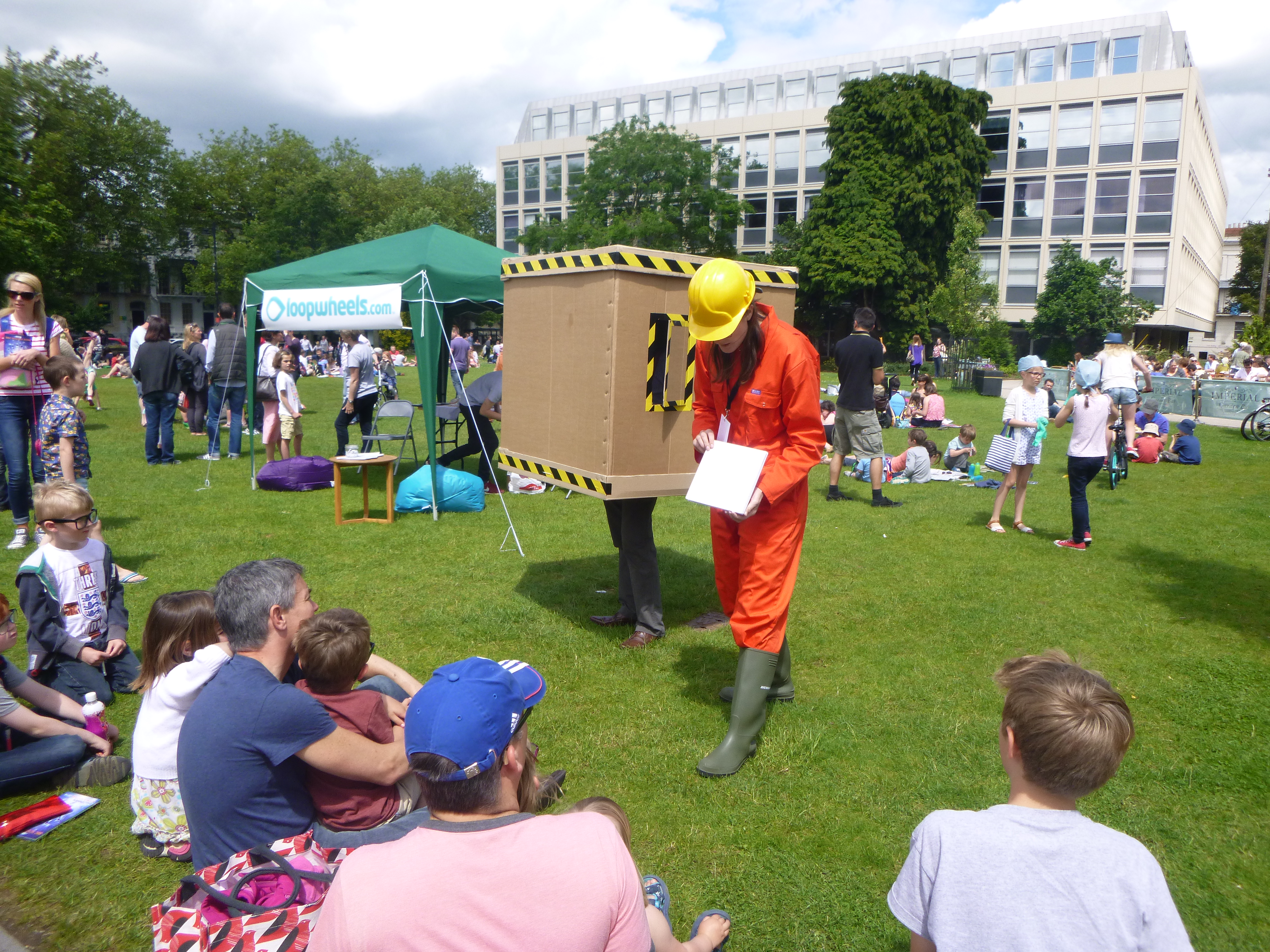
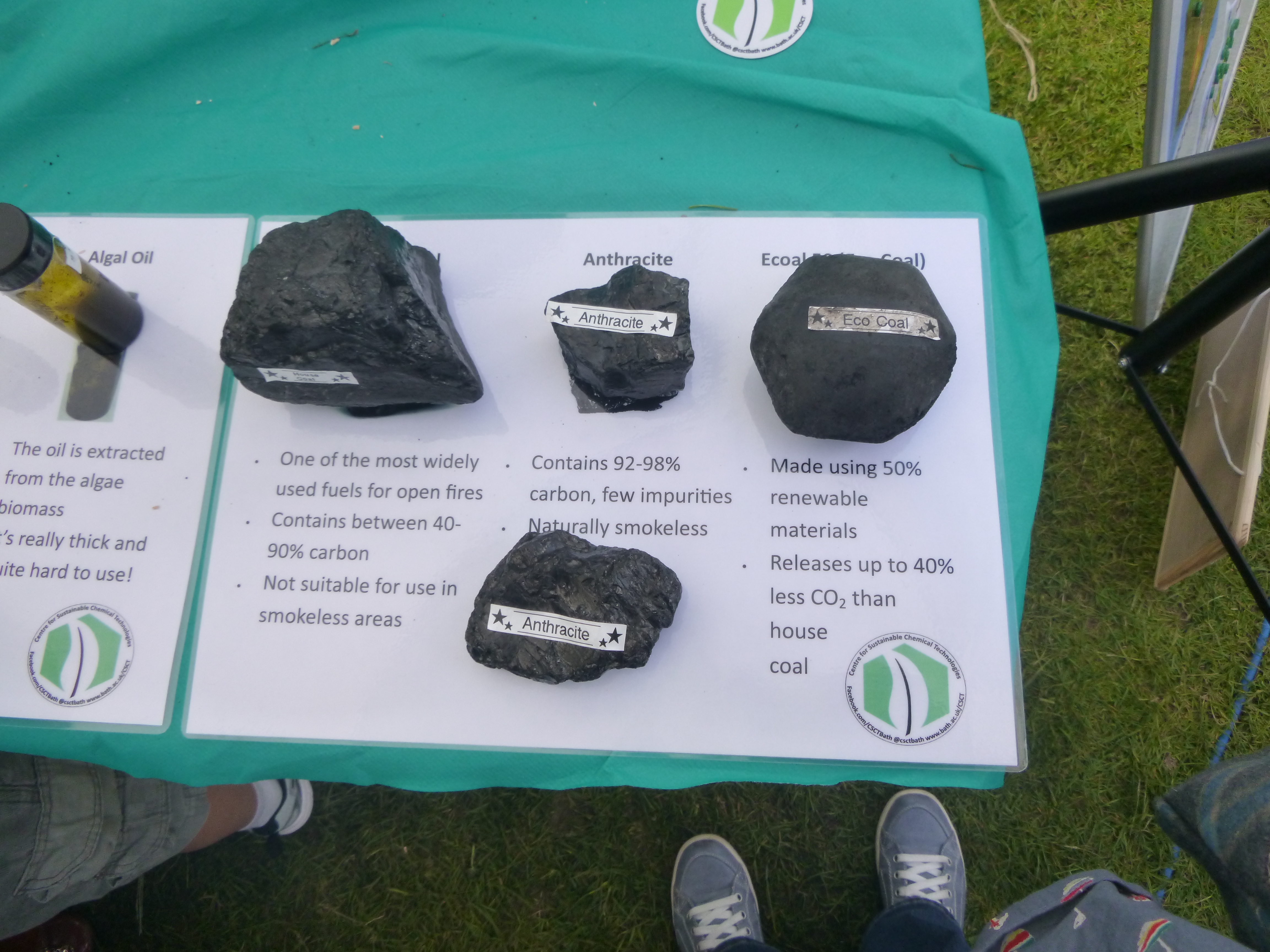
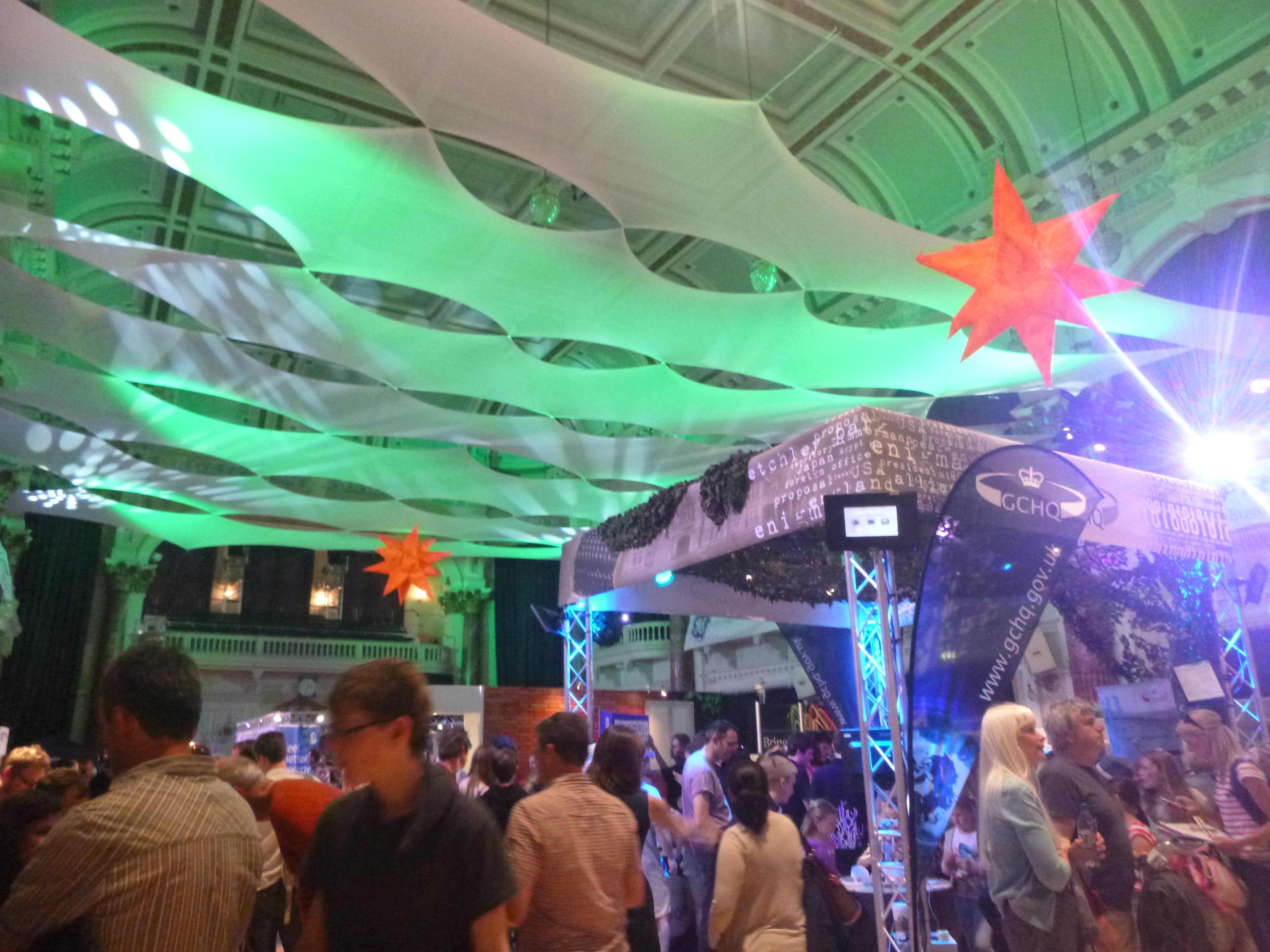
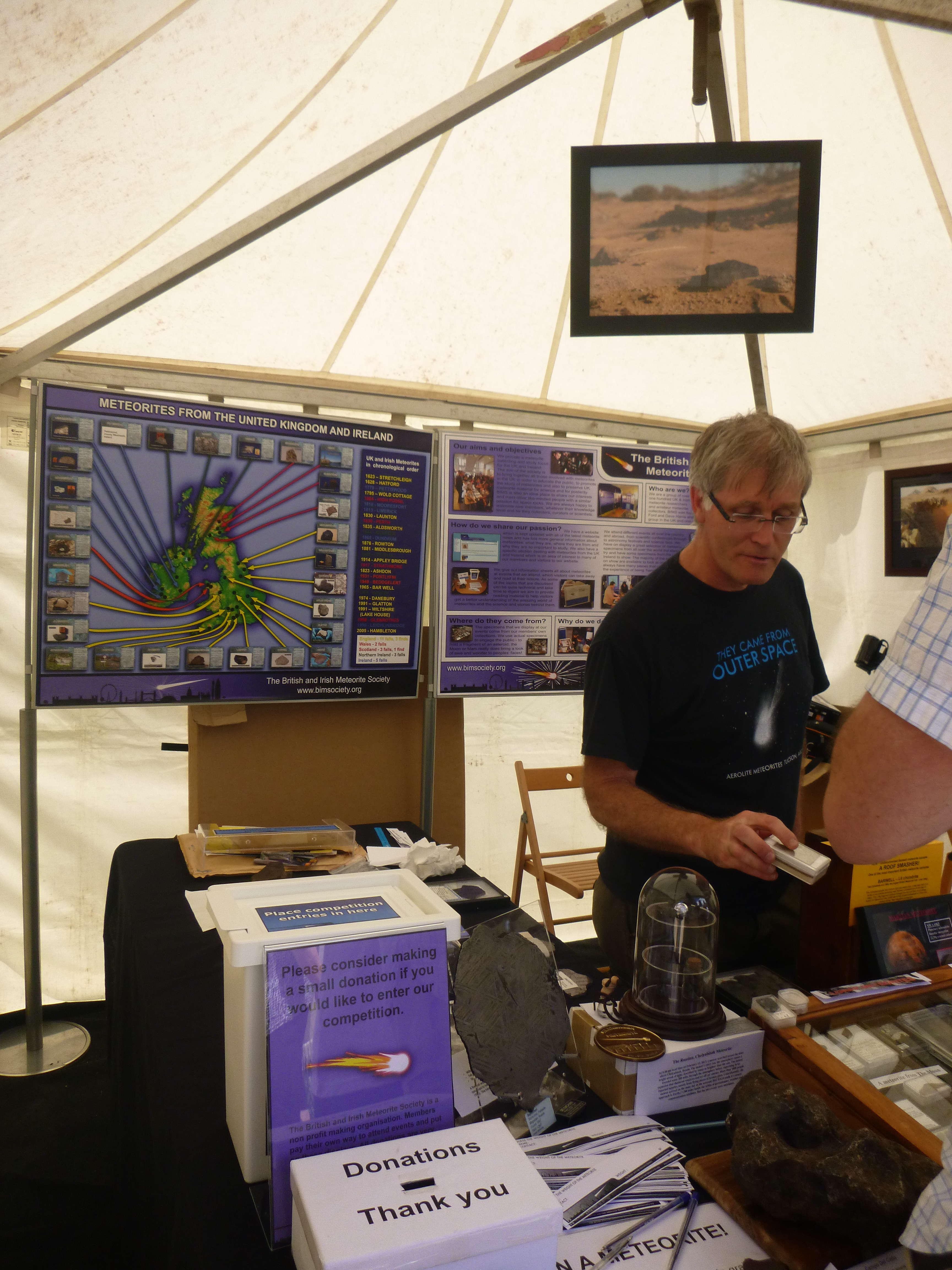
This year, for the first time, I attended the Cheltenham Science Festival as a tourist. And it was great!! I was particularly pleased to see how much geoscience there was there, and had a number of great chats with scientists and engineers on the value of the festival and of the work or research that they were doing. As a quick snapshot, here are a few of my favourite things from the festival…
Tag Archives: geology
Farming for energy – do solar and geothermal power have a place in a modern farming landscape?
On Friday I attended the Devon County Show, at Clyst St Mary outside Exeter. Now I love the Show, and try and attend as often as possible. I love the crafts, the gardening, the livestock (I have a special place in my heart for the heavy horses and the Dartmoor Grey-faced sheep), but this year I was looking for something else – I was looking for energy.
In the last 6 months I have begun to notice just how many onshore wind and solar farms there are near me and having an interest in geothermal power I wanted to see if this move into farming energy was represented at the county’s biggest exhibition of farming and rural life. What I found was pretty interesting. Energy farming was present at the show, but the largest contribution was for solar.
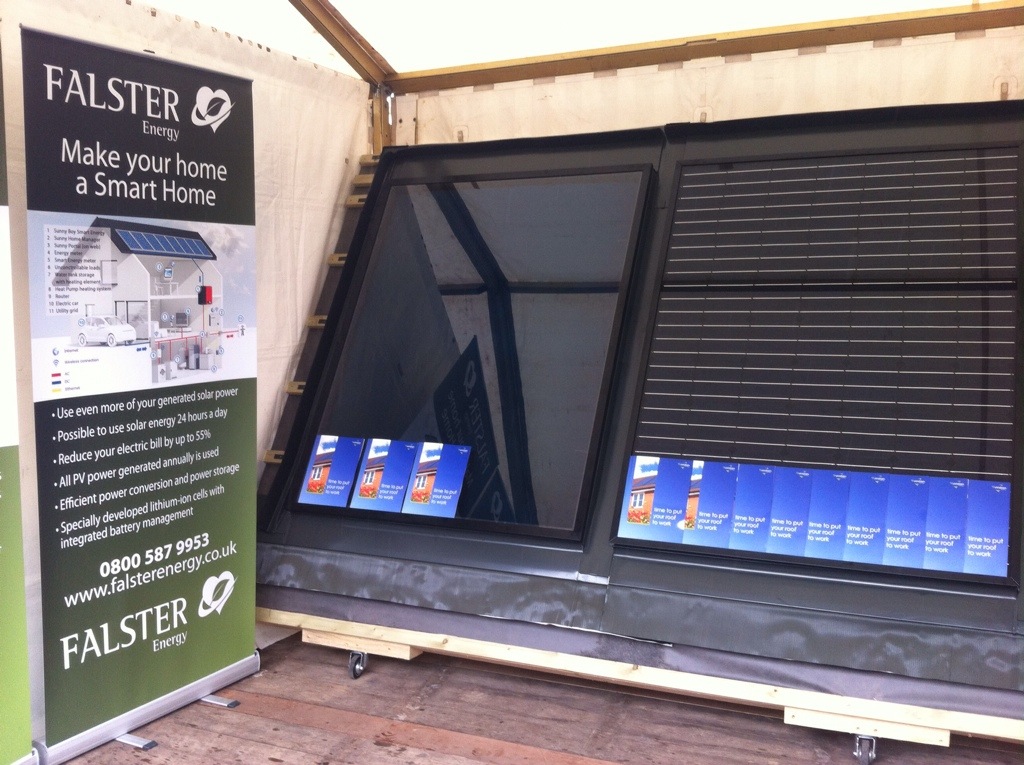
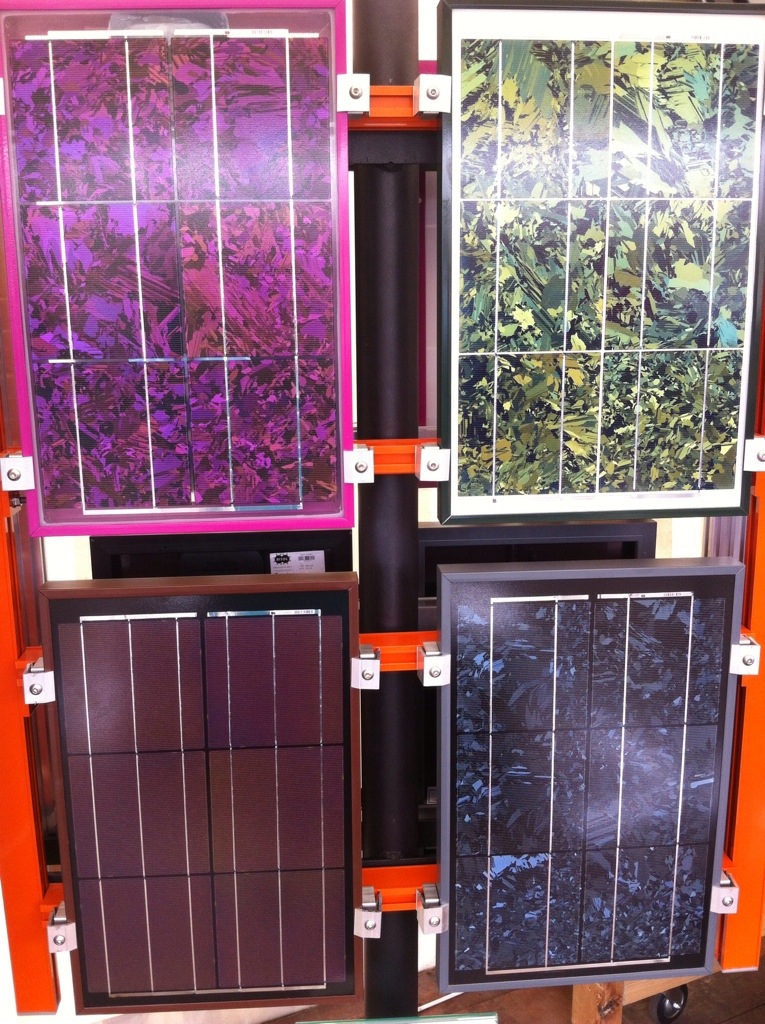
I spoke to one of the companies – Faltser Energy – about the use of solar by consumers in Devon. The sales representative, Greg Hockin, told me that it was a pretty mixed portfolio, especially for their company. A lot of products were for individual installations, but they also supplied to farms, most often as a supplement to activities (i.e. on a barn roof) than as a revenue generator. He also mentioned that they had developed a technique to colour the panels – something I had never seen! I understood the green or the blue, but pink solar panels?!? Seems a bit like an extreme choice for me!!
Another thing that Mr Hockin mentioned is that all the panels were made in the UK. When I questioned him further, he did clarify that by saying that many of the components would be made overseas, for instance in China, then assembled in the UK and that got me to thinking about what a solar panel is actually made from….
I’ve never really had a close look at a solar panel, but when you get near you can really see the crystalline structure of the panel itself. Solar panels are usually made with silicon crystals which provide the pretty crystalline pattern. They usually have another mineral added into the mix to make them more efficient, such as gallium arsenide, cadmium telluride or copper indium diselenide. One tricky thing with these compounds is that the source elements are all listed as under moderate to high risk on the British Geological Survey’s ‘Risk List‘, a list that calculates the risk to the supply of economically important elements. For four of the elements used, the main producer and reserve holder is China. So with China having the monopoly on these mineral’s supply and on production of many of the component parts, how much can you really say is made in Britain? And if we had to, could we make solar panels entirely from British products? Well the simple answer is probably not. Although you can find many of these elements in their mineral forms in the UK either as an ore or a byproduct of processing that ore – none of them exist in quantities large enough to mine commercially anymore – our reserves are depleted.
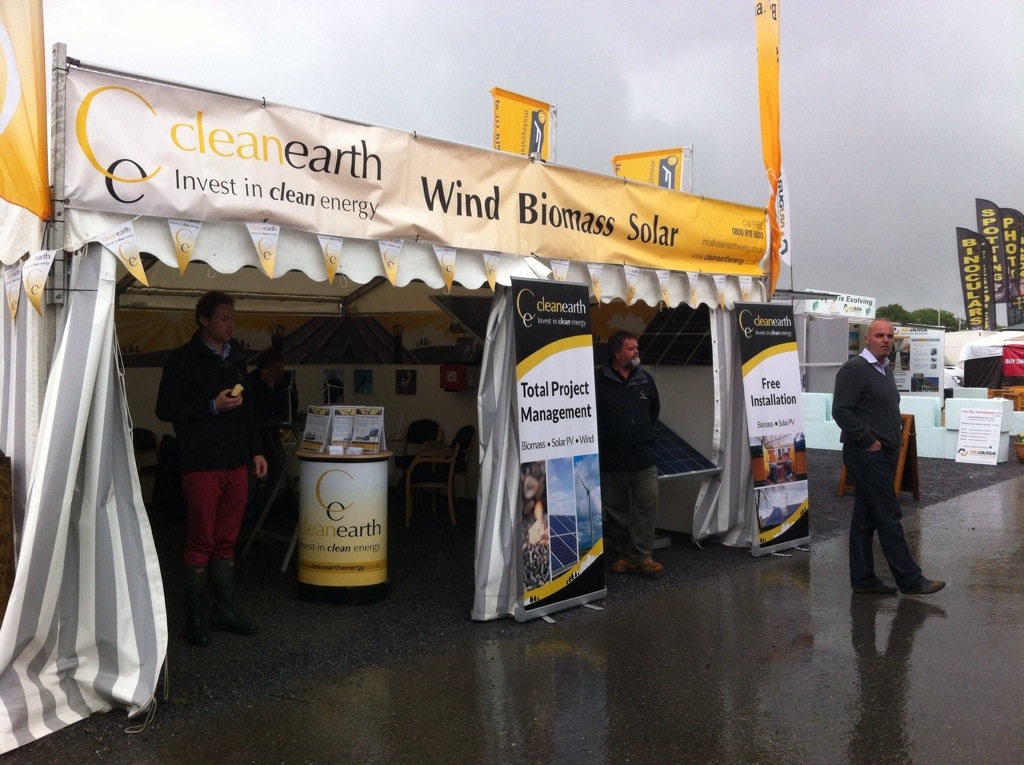
So do we have another option? Well, although solar power is great, I have great faith in the future of geothermal, and at the Clean Earth stand, I met a young man, whose parents have adopted geothermal power on their farm in an interesting way. At Clean Earth, they are involved in leasing land from farmers to create energy farms – be it solar, wind or biomass. They have a number of success stories around the south west (anyone from down here may know about Crealy Adventure Park? They now have 2020 solar panels to supplement the Park’s use of energy from the National Grid), but I was most interested to hear about Mesmear Farm in Cornwall.
At Mesmear, the Roses have combined a geothermal powered heat pump with solar panels to provide heat and electricity to the farm and the rental cottages they maintain. The geothermal heat pump makes use of the farms proximity to the massive granite batholith nearby and heats water to around 50°C for space heating and hot water from a ground temperature of about 11°C.
To me this was an innovative use of combining a tried and tested (but limited) method of electricity production – the solar panels – with a new and innovative, but untested method of heat and energy production – the geothermal. The farm still draws from the National Grid, but only at times of peak requirement and it’s carbon footprint is much smaller. It makes me wonder how many farms, business and households across the South West (and in other areas where geothermal is an option) are using this low key, combined method of incorporating geothermal into their energy mix. I’d love to hear from you if you do!!
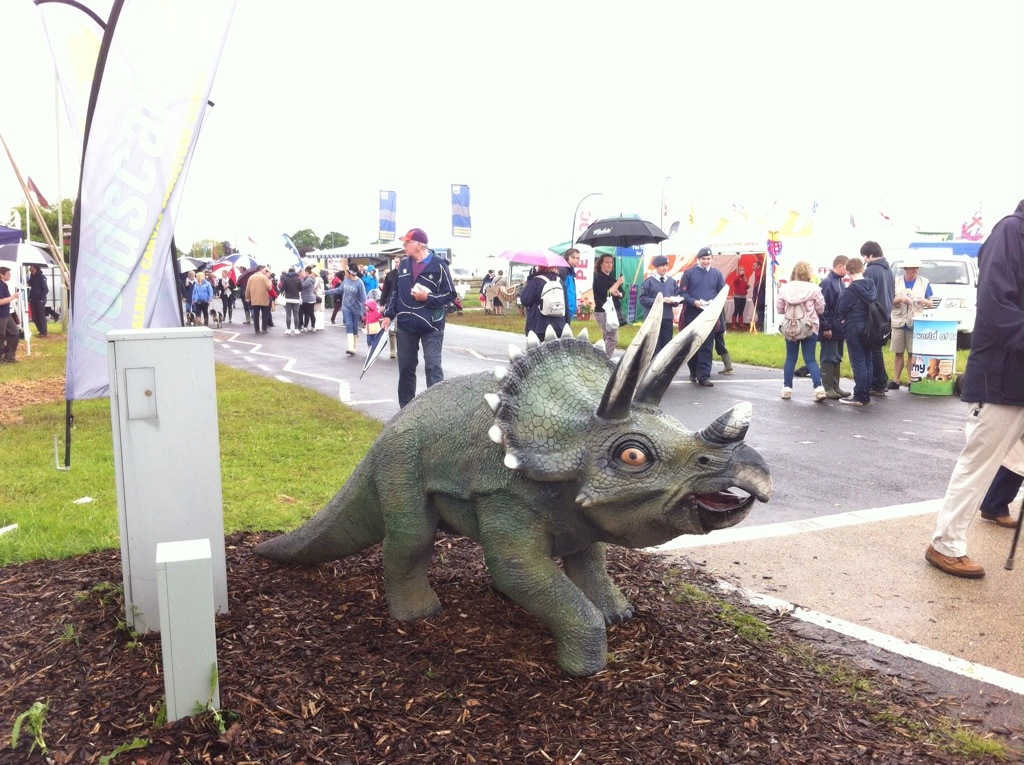
So there you have it, it’s easy to dismiss the Devon County Show as all mud and cows, but there are important things for geologists there too…. and the odd dinosaur!
5 things you wouldn’t expect to find at a geology conference
One of the things that I realised whilst at EGU last week was how broad the subject of geology actually is and how we don’t always appreciate the breadth of our subject. Some of this obviously come from the influence of interdisciplinary studies like my own, but some it comes from the unique and innovative ways that geoscientists are attempting to broaden our understanding of the planet. To highlight this I have picked out 5 things you wouldn’t expect to see at a geology conference – some more than others.
1- Astronaut photographs
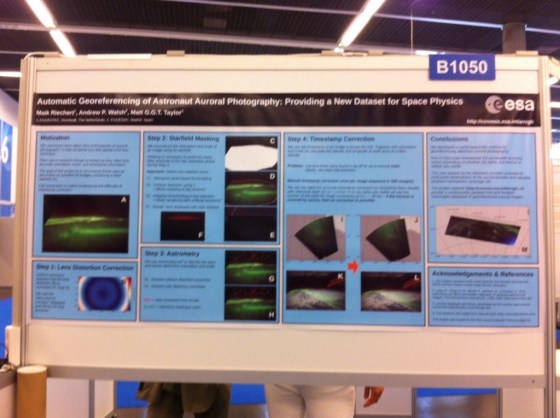
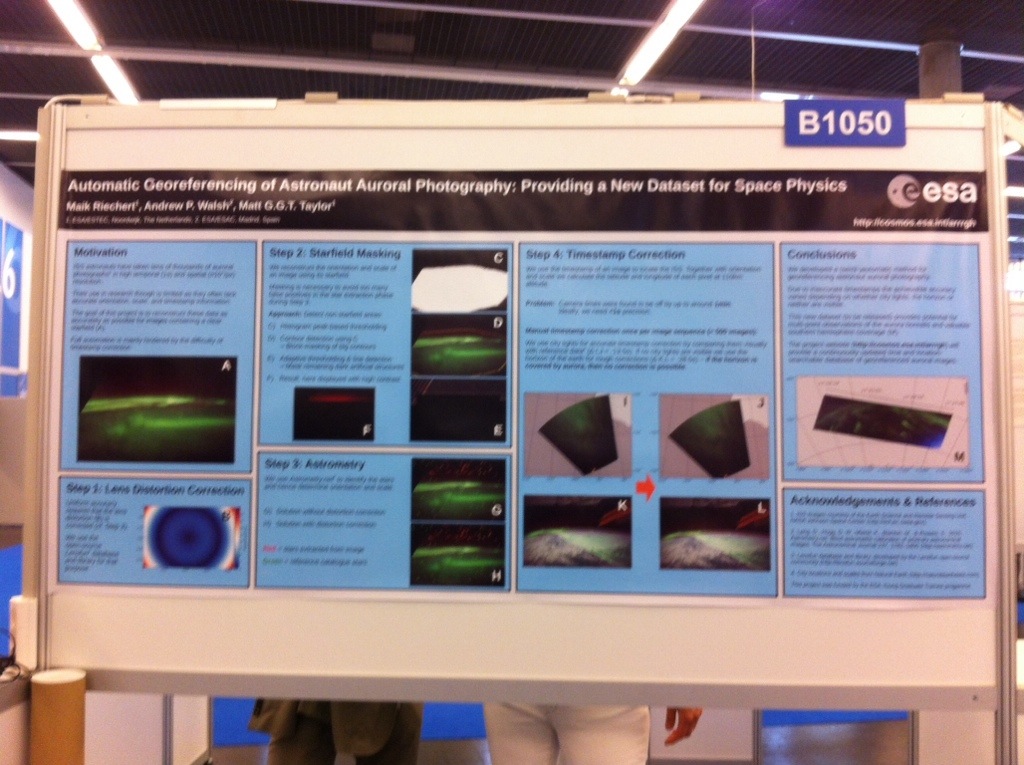
‘Automatic Georeferencing of Astronaut Auroral Photography: Providing a New Dataset for Space Physics‘ from Multi-scale Plasma Processes in the Earth’s Environment session (ST2.2) – using data from recent space missions to advance our understanding of space physics.
Recently, the work of astronaut Commander Hadfield brought the activities of the people who get strapped to a rocket and propelled beyond our atmosphere to learn more about our planet back into the public eye. But although the images they produce are beautiful, inspiring and humbling all at the same time, they are often not very useful because there is no way for scientists to tell the scale of the image or where exactly it was taken. The work of Reichart, Walsh and Taylor addresses this problem by using ‘starfield recognition software‘ to calculate the height and location of the images. Now I don’t know about you, but there is something so romantic sounding about starfield recognition software. It makes me think that the software we so often associate with catching criminals can actually be used for something uplifting and will, once fully developed, improve our understanding of how the Auroras (both Australis and Borealis) work.
2- Willow tree root growth patterns
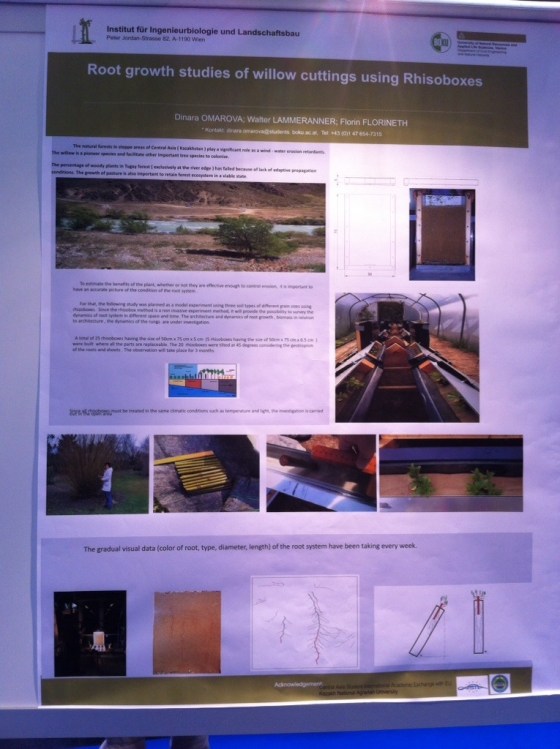
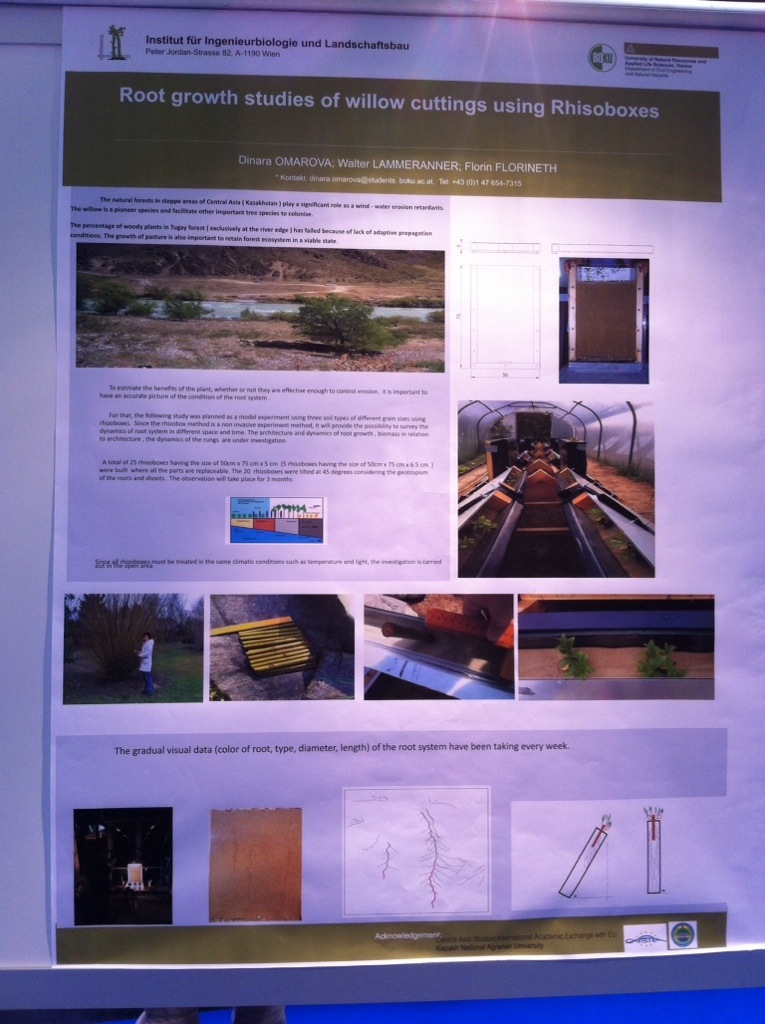
‘Root Growth Studies of Willow Cuttings using Rhisoboxes‘ from How Vegetation Influences Soil Erosion and Slope Stability: Monitoring and Modelling Eco-hydrological and Geo-mechanical Factors session (SSS2.10/BG9.7/GM4.8/HS8.3.9/NH3.9) – the relationship between vegetation and how soil behaves, especially focussing on land restoration projects and management plans.
When you think of geology, willow is probably not the first thing that springs to mind. However, when you think about landslides – which are most definitely geological – the presence, absence or behaviour of plants is very important. In Central Asia (amongst other places) willow is vital in facilitating the colonisation of other tree species in forests that help protect the soil from erosion. This study, although it seems like it belongs in a botany (or at least biology) conference is actually examining the material necessary to mitigate the effects of erosion, which can lead to lots of other geological problems.
3- Fluid dynamics of cars
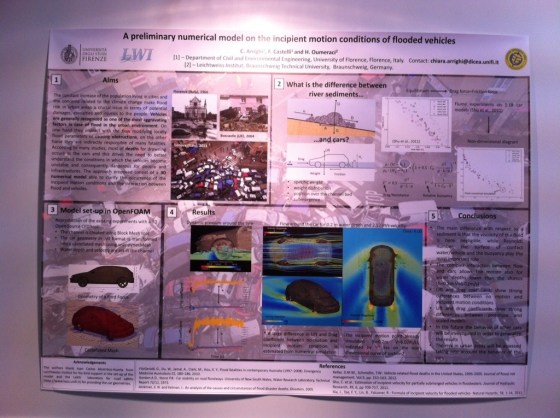
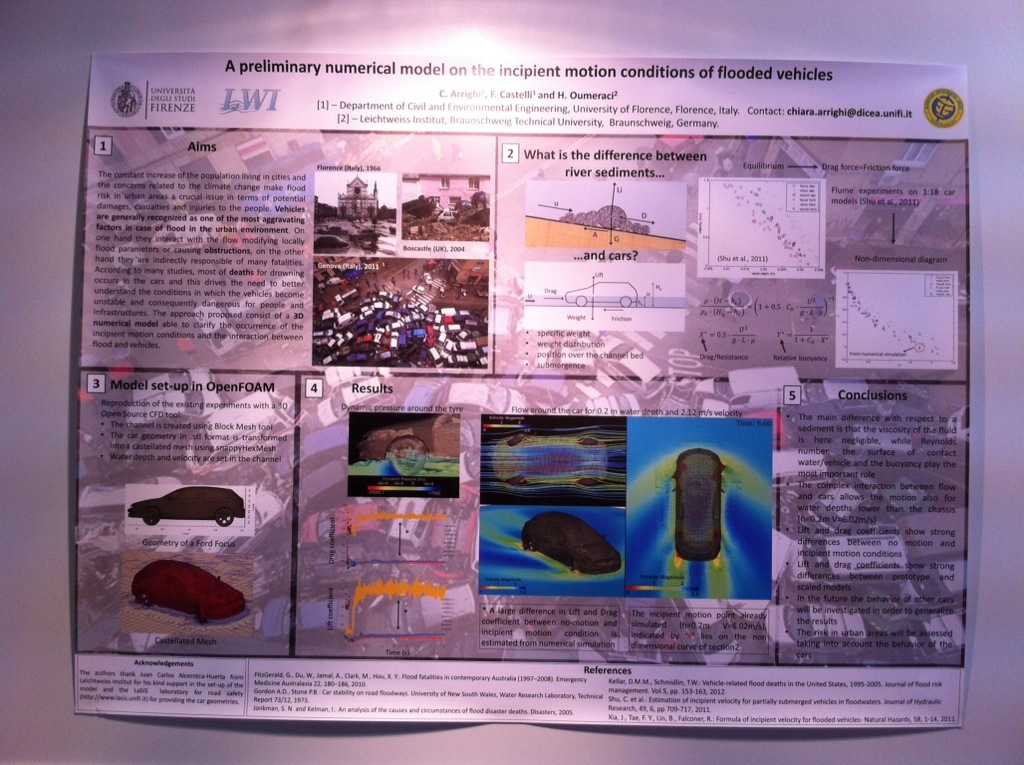
‘A Preliminary Numerical Model on the Incipient Motion Conditions of Flooded Vehicles‘ from Flood Risk and Uncertainty session (NH1.6) – predicting current and future flood risk using state of the art flood risk assessment methodologies.
This had to be one of my favourite posters – mostly due to the obvious/unexpected dichotomy of the contents. If you picture a flood, what do you see? Rushing muddy brown water tearing away at the countryside, carrying the odd tree? Perhaps. But more and more often nowadays floods are affecting our urban areas, and the thing the floodwater is likely to be dragging is a car not a tree. This work by Arrighi, Castelli and Oumeraci takes a closer look at how vehicles are affected by flood water and how they affect the flow themselves. It’s also a sobering look at how easy it is to loose control of a vehicle in a flood and explains why most studies identify the greatest cause of deaths from drowning in a flood to be a car.
4- Coffee residue
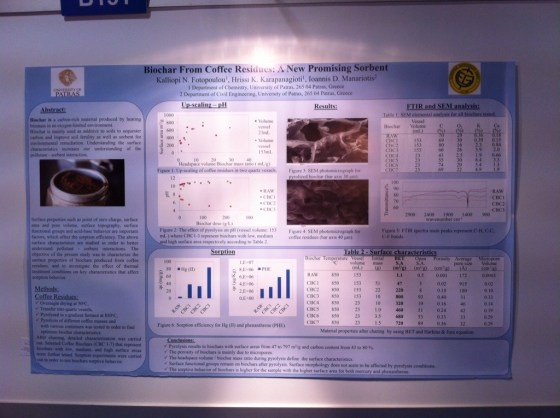
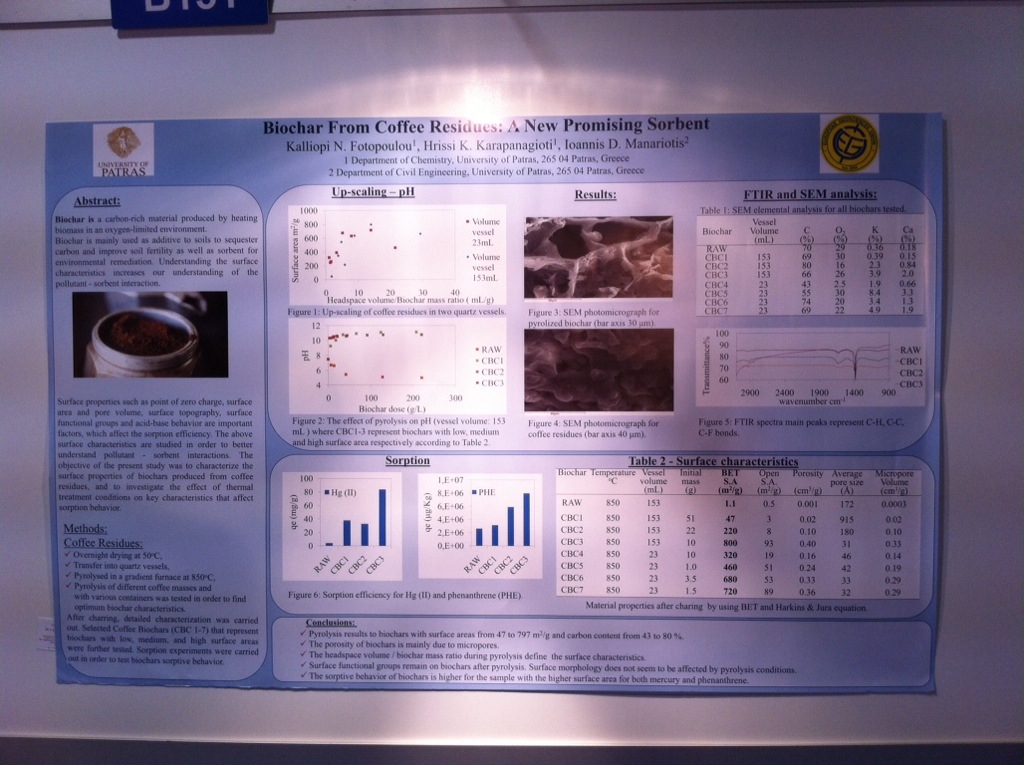
‘Biochar from Coffee Residues: A New Promising Sorbent‘ from Novel Sorbent Materials for Environmental Remediation session (SSS9.8) – the use of sorbent materials (a material that can collect molecules of another substance) for environmental applications.
If the conference last week was attended by over 12,000 delegates, how many cups of coffee were drunk do you think (added to the fact that it was nigh on impossible to get a good cup of tea)? Now imagine you could take the dregs of all that coffee and do something useful with it! Well that is precisely what Fotopoulou, Karapanagioti and Manariotis were exploring- how to use coffee residues to make biochar. Biochar is a carbon-rich substance that is added to soils in order to sequester carbon, improve the quality (fertility) of the soil and assist in environmental remediation. Who knew an old cup of coffee could be so useful?!
5- Wind patterns in the Pacific
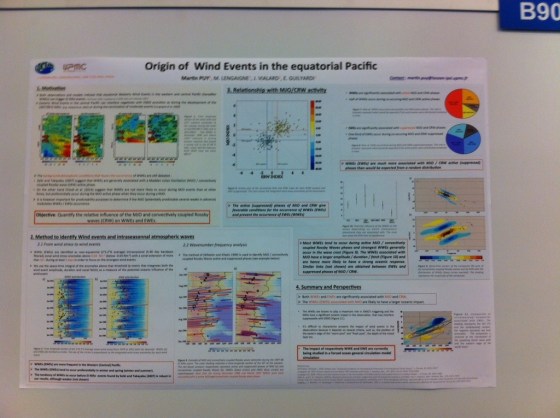
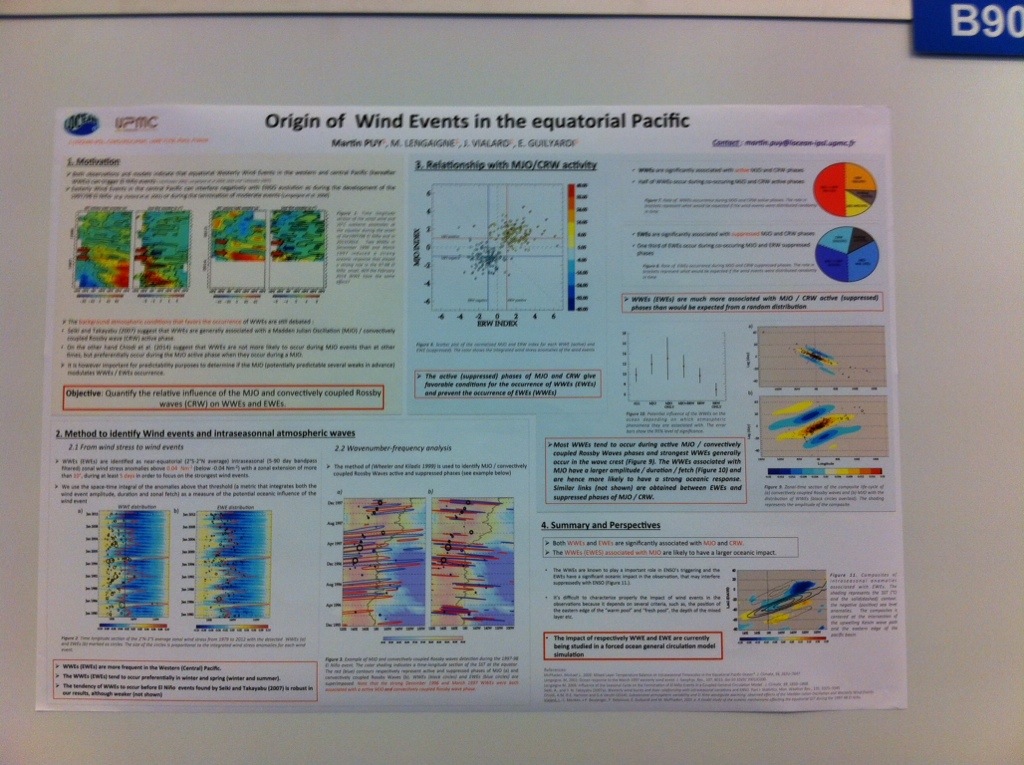
‘Origin of Wind Events in the Equatorial Pacific‘ from ENSO: Dynamics, Predictability and Modelling session (NP2.1) – ENSO stands for the El Niño Southern Oscillation and includes all studies of El Niño and La Niña.
So wind may not be that disconnected from geology – but wind patterns? Over water? Yes at a geology conference a geoscientist’s awareness of the processes that shape our planet extends even to the climate. Which is not all that surprising really when you consider that one of the biggest issues and areas of study that geologists deal with nowadays is climate change.
These are only the posters that I came across and thought interesting during the conference – I’m sure there were many many more! Did you see any examples of a poster or a presentation that you wouldn’t expect to see at a geology conference?!
EGU 2014 – the conference of champions!
Well it’s that time of year – the time where if you email an academic, chances are you will get an out of office response. It’s not business time – those aren’t business socks, they are conference socks! It’s conference … Continue reading
X-Men geology?!
Sometimes a single word can lead to a really funny idea! Sitting at lunch the other day one of my colleagues started talking about their research in palaeomagnetism (the study of the magnetic history of the rocks) and particularly, magnetostratigraphy. Magnetostratigraphy is a method used to date volcanic and sedimentary materials. It is done by analysing the magnetisation of the rock, based on what the Earth’s polarity was at the time the rock was laid down, because whenever the Earth’s magnetic field changes, so does the residual or left over magnetic signature of the rocks formed.
The only trouble with their discussion was that as soon as they said ‘magnetostratigraphy’, all I could think of was Magneto from the X-Men…

Magneto from the Magneto comics..
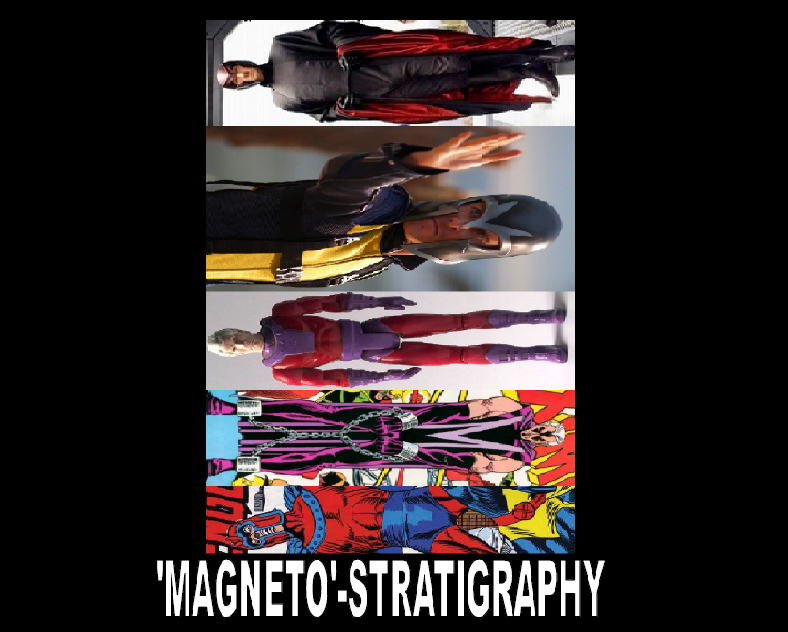
And then all I could think of was ‘magneto’ ‘stratigraphy’! Had anyone ever done a gif image of magneto stratigraphy?!
NO?!?!
So I decided to draw one! And voila – ‘MAGNETO’-STRATIGRAPHY!!
And yes, I know I’m a massive nerd.
Enjoy!!